Air conditioning for commercial premises
Shops, offices, salons, cafes, church halls and the buildings in between. We install, commission and maintain the systems that go in them, from a single wall unit in a back office to VRF across a building. They heat as well as cool, so the same system that keeps a shop floor comfortable in August is what warms it in January. Every job starts with a survey and a fixed written price agreed before anyone starts work.
F-Gas registered engineers • Fixed written price before work starts • East Midlands, Lincolnshire & Yorkshire
What we actually do on commercial sites
Four things, and we would rather be clear about which of them you need before anyone quotes anything.
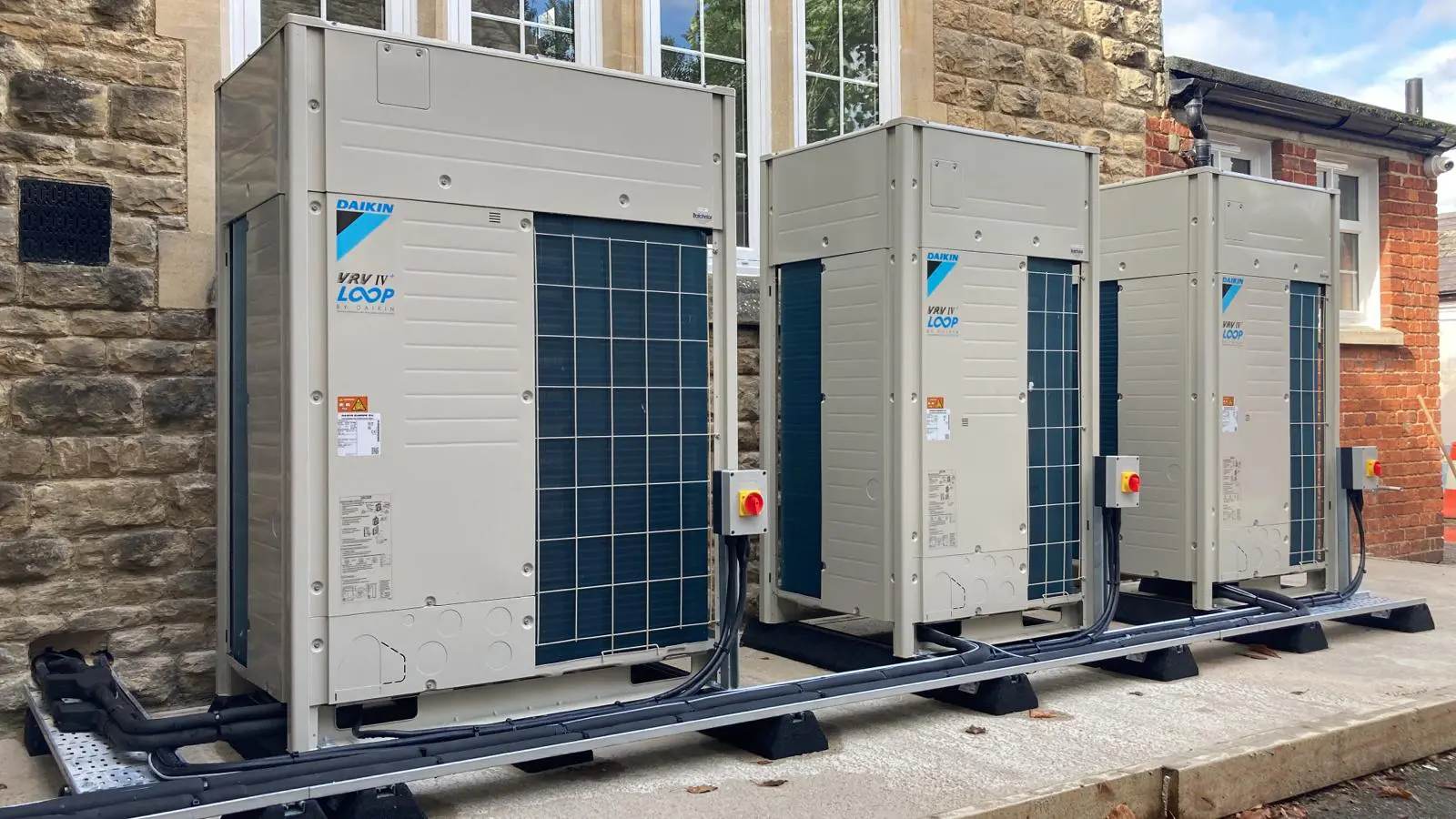
Splits and multi-splits, cassettes, concealed ducted units, floor consoles, and VRF and VRV including 3-pipe heat recovery and water-cooled. Every one of them is an air-to-air heat pump, so it heats as well as cools. Pressure tested, charged, logged and handed over with the commissioning record.
Planned maintenance on contract, or one-off servicing. We take on systems somebody else fitted, which is most of what we are asked about.
Breakdowns, fault finding and repairs. A shop with no cooling on a Friday cannot wait for a quotation process, so contract customers go first.
F-Gas registered engineers. TM44 every five years over the threshold, and a refrigerant leak check at a set interval over a certain charge, with a log kept for it. Neither is optional and nobody tells you.
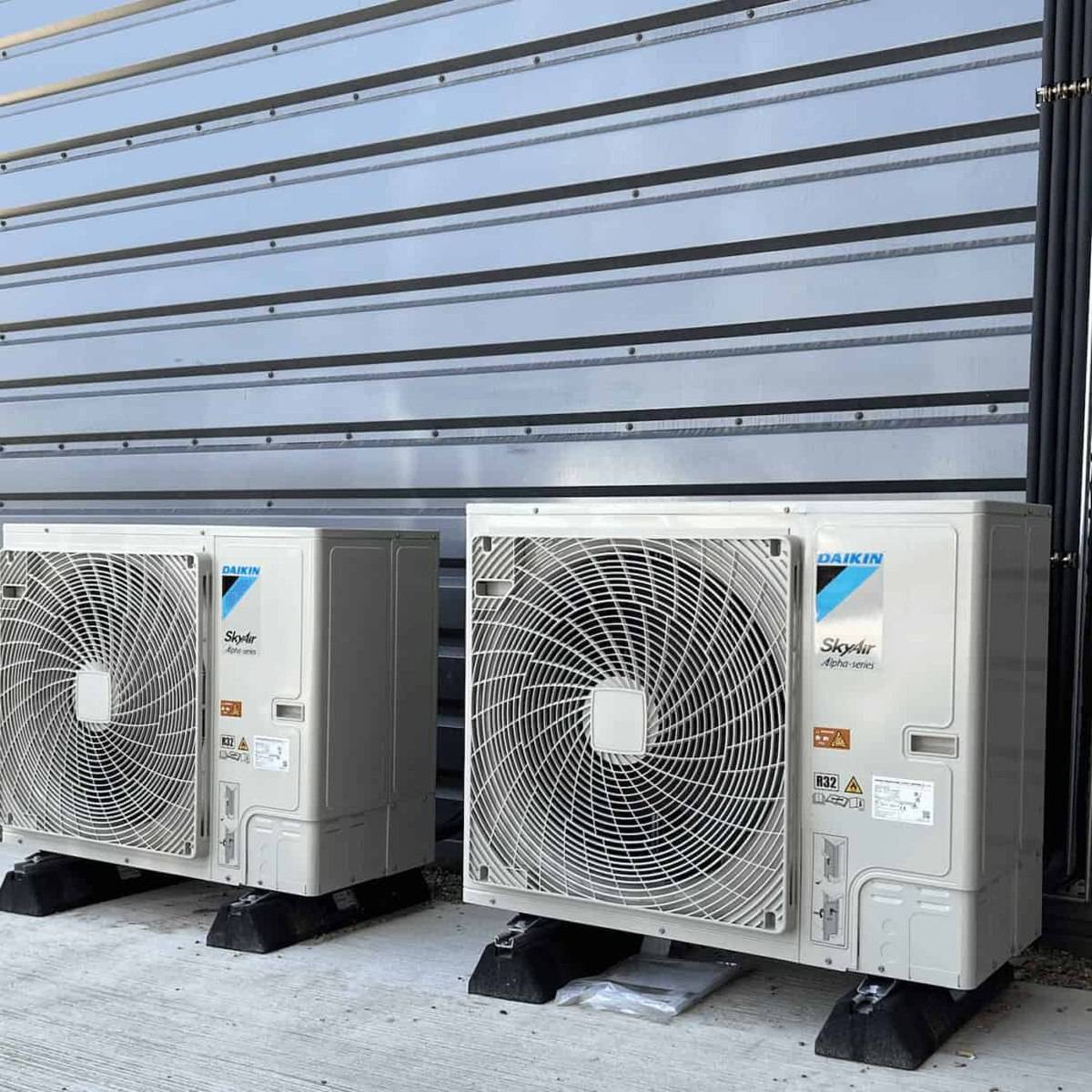
Up to a whole building
Most of what we fit is a split or a multi-split. But the question a commercial enquiry usually turns on is whether we can go further than that, and the answer is yes. VRF and VRV, including 3-pipe heat recovery where one part of a building is heating while another is cooling, and water-cooled systems.
The scale changes what matters. On a single shop it is the unit. On a building it is where the plant can stand, what the structure will carry and how the pipework gets to every floor. That is a survey question, not a catalogue one.
If a split is the right answer for your premises we will say so. We would rather fit the system the building needs than the biggest one we can sell you.
It runs both ways
The thing most people do not realise about commercial air conditioning is that it is heating equipment too.
Every system on this page is an air-to-air heat pump. In summer it moves heat out of the building. In winter it runs the other way and moves heat in. Same box, same pipework, same outdoor unit, running backwards.
That matters commercially because a shop or an office that puts a system in for two hot months is buying its winter heating at the same time, out of the same equipment, instead of running something else alongside it.
One building, more than one answer
Commercial premises rarely want the same thing on every floor. A shop floor and the office above it have different ceilings, different hours and different people in them, and the right system is usually not the same in both.
The ordinary case runs like this. A shop with a suspended ceiling takes a four way cassette, which drops into the grid and reads as part of it. The office above has a deeper void, so it runs on concealed ducted units and all you see in the room is a grille. Both are served from plant on the flat roof, through one riser, rather than hanging a condenser off the front of the building for every indoor unit.
That last point is usually what decides a commercial job. The equipment is rarely the hard part. Where the outdoor plant can physically go, what the landlord will allow on the outside of the building, and how much has to be opened up to get pipework to it. Those are what move the price. We work that out at survey and put it in writing before you commit.
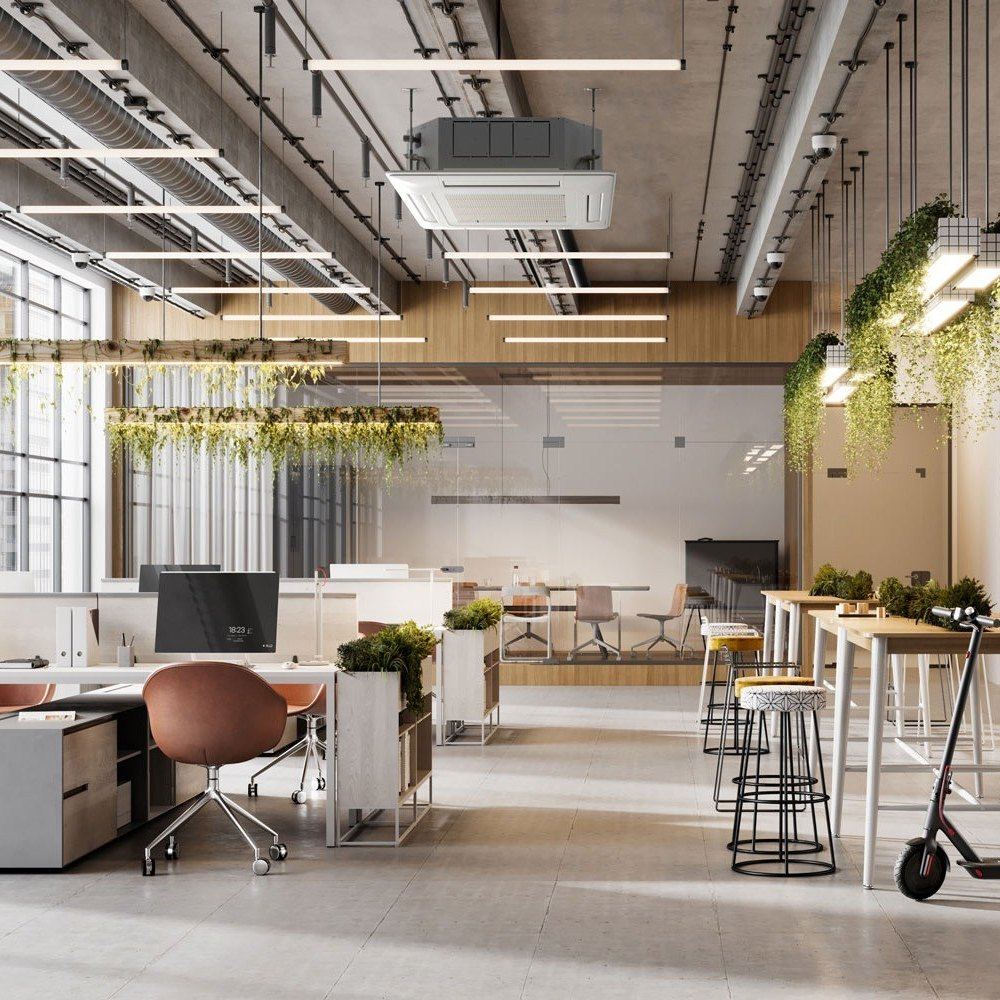
What it looks like once it is in
The format is chosen by the ceiling and by what the room is for, which is why the same building often ends up with more than one of them.
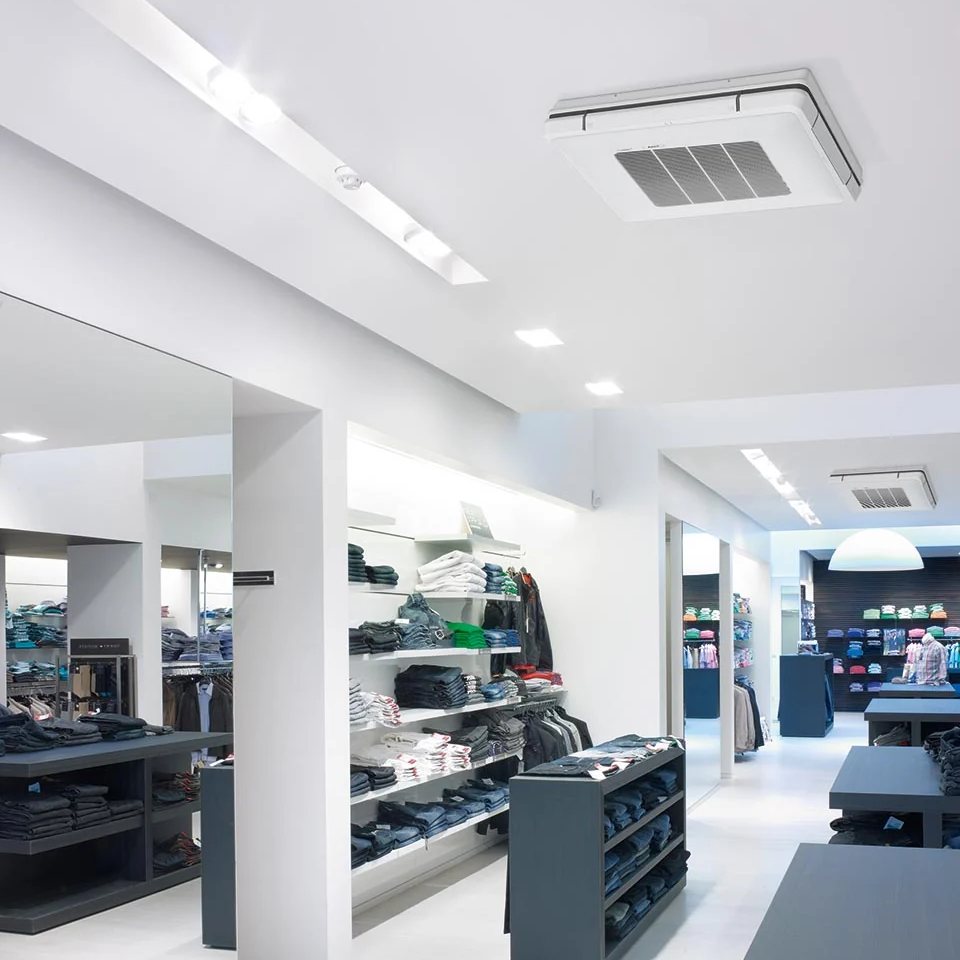
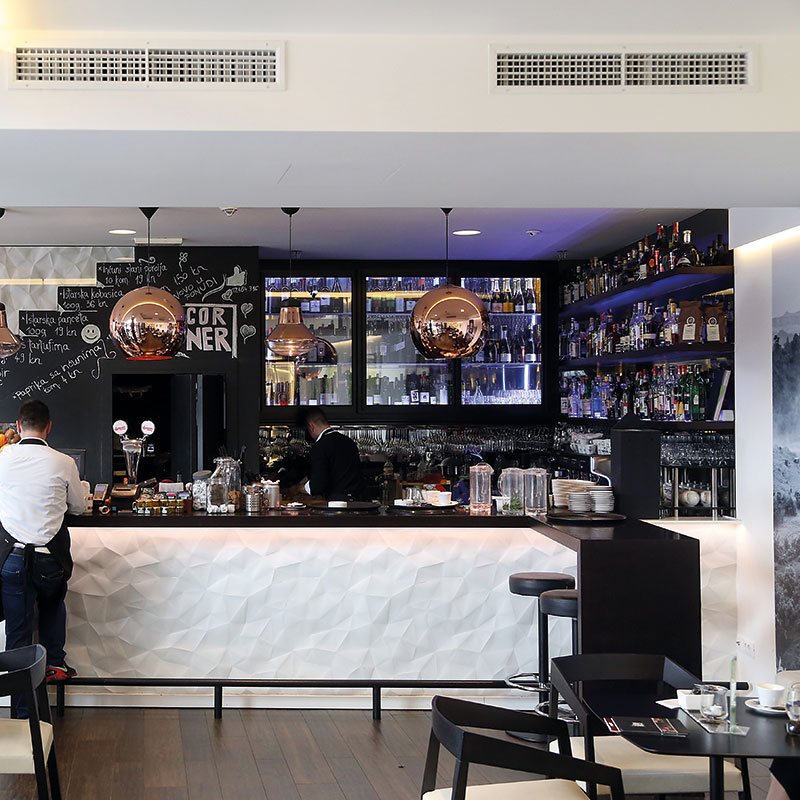
Photographs show the types of system we install.
The detail, by the thing you need
Each of these is a full page rather than a paragraph, because the questions people actually ask are specific ones.
Who we work for
On a commercial job the person paying is not always the person in the building, so it is worth saying who we quote for.
The shop, the office, the salon.
Across one property or a dozen. We will deal with the tenant direct.
On a fit-out, to your programme, alongside the other trades.
One contract, one number to ring, the same paperwork from every site.
Also on commercial sites
The jobs people assume they have to find somebody else for. Each one is answered properly in the questions at the bottom of this page.
Cooling that runs all year, on its own unit.
Taken out, relocated, or decommissioned with the refrigerant recovered.
Fresh air into the space, which cooling on its own does not do.
The supply, isolators and containment the installation needs.
How a commercial job runs here
- 1Surveyed before it is priced
A room-by-room heat load and a look at where the outdoor plant can go. Not a price off a floor area over the phone.
- 2A fixed written price
Agreed before we start. If the survey changes what the job needs, you hear it then rather than on the invoice.
- 3Paid in stages
Deposit, start and completion. We do not offer finance or third party payment plans, and we do not ask for the full amount up front.
- 4Finished so it can be looked at
External pipework runs in metal trunking rather than plastic. On a building anyone can see, that is the difference between an installation and a mess.
- 5F-Gas registered engineers
Every system is installed and commissioned by F-Gas registered engineers, with the commissioning record handed over on completion.
- 6A 12 month workmanship warranty
Twelve months as standard on our work, alongside the manufacturer's warranty on the equipment itself.

Commercial, asked and answered
Do you do VRF, or only splits?
Both. We install, commission and maintain VRF and VRV systems, including 3-pipe heat recovery, where one part of a building is heating while another is cooling, and water-cooled systems. Smaller premises are usually better served by splits or a multi-split, and we will say so if that is the case.
Does it heat as well as cool?
Yes, and on a commercial building that is usually the bigger half of the job. Every system we fit is an air-to-air heat pump: in summer it moves heat out of the building, and in winter it runs the other way and moves heat in. It is the same box doing both, so a shop or office that puts one in for the summer gets its winter heating out of the same equipment.
Will you maintain a system you did not install?
Yes, and that is most of the maintenance work we are asked about. We will look at what is there, tell you what condition it is in and what it needs, and price the contract from that rather than from a standard list.
Do I need a TM44 inspection?
If the total installed cooling capacity in the building is over 12kW, yes, every five years. That adds up across the building rather than per unit, which catches people out. The TM44 page sets out the threshold, the register and the penalties.
Something has broken down. Can you come out?
Yes. We attend breakdowns, fault find and repair, whether or not we installed the system. Customers on a maintenance contract are attended first, which is most of what a contract buys you. Call us and we will tell you straight when we can get to you rather than guess.
Do we need refrigerant leak checks?
If a system holds more than a set amount of refrigerant, yes, at an interval that depends on how much it holds, and you have to keep a record of it. It is a separate requirement from the TM44 inspection and it catches people out. We will tell you at survey, or at the first maintenance visit on a system we have taken on, whether yours is caught.
Can you cool a server or comms room?
Yes, and it is worth treating separately from the rest of the building. That room needs cooling all year including in the middle of winter, when the system serving the offices is heating. It usually wants its own unit rather than being hung off the building system.
Can you take a system out, or move one?
Yes. Removal, relocation and decommissioning, which comes up when a unit changes hands or a layout changes. Refrigerant is recovered rather than released, because an F-Gas registered engineer is not permitted to do it any other way.
Do you do ventilation as well?
Air conditioning moves the air that is already in a room around and changes its temperature. It does not bring fresh air in from outside. Ventilation is the separate thing that does, and it is much easier to deal with at survey than after the ceiling has been closed up, so raise it early and we will tell you what the space actually needs.
Who sorts the electrics?
Every installation needs a power supply, an isolator and something to run the cable in. Ask at survey and we will tell you what the job needs and who is doing which part of it, so it is settled before anyone turns up rather than on the day.
How disruptive is a commercial installation?
It depends almost entirely on where the outdoor plant goes and how pipework reaches it, which is why we survey before quoting. We will tell you at survey what has to be opened up and roughly how long the site will be affected, so it can be planned around trading.
What areas do you cover?
The East Midlands, Lincolnshire and Yorkshire, from our unit at Bilsthorpe in Nottinghamshire. If you are near the edge of that, call and ask and we will tell you straight.
Which manufacturers do you fit?
Daikin, Samsung, Midea and Mitsubishi Heavy Industries. We are not tied to one of them, and the right choice on a commercial job is usually decided by what the building needs and what can be serviced easily afterwards.
Tell us about the building
The rooms, what they are used for, the ceiling in each, and where you think the outdoor plant could go. We will survey it, tell you what the building actually needs, and put a fixed written price against it before you commit to anything.