Ceiling cassettes — four-way air from a flat square in the ceiling
A cassette is an indoor unit that sits up in the ceiling with only its panel showing. It pulls air up through the middle and throws it back out along the ceiling on up to four sides, which is why a single unit can cover a square room evenly and why nobody ends up sitting directly in the airstream. It is the default choice in shops and offices, and an increasingly good one at home.
F-Gas registered engineers • Free design survey • East Midlands, Lincolnshire & Yorkshire
Up through the middle, out along the ceiling
The body of the unit is in the void and the decorative panel is flush with the ceiling. Room air is drawn up through the centre of that panel, through a filter and a coil, and discharged through louvres at the edges so it hugs the ceiling before it falls.
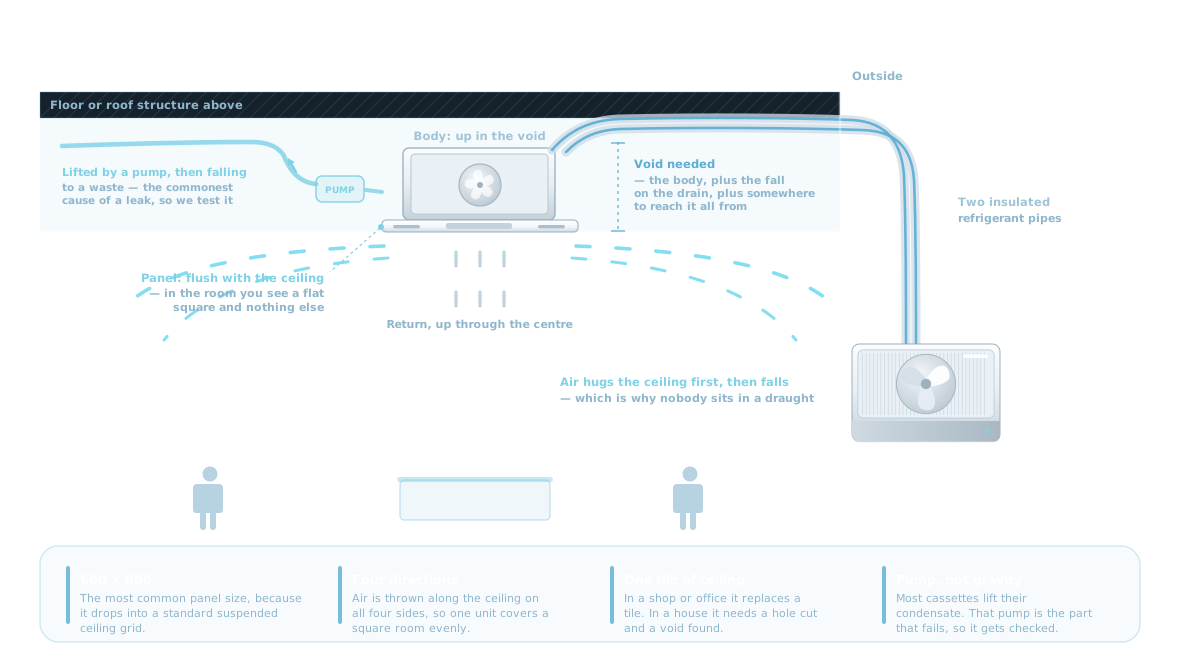
Because the air is thrown along the ceiling rather than at the room, it mixes on the way down instead of arriving as a cold column. In a café or an office, that is the difference between a comfortable room and one person moving tables.
It suits a square room
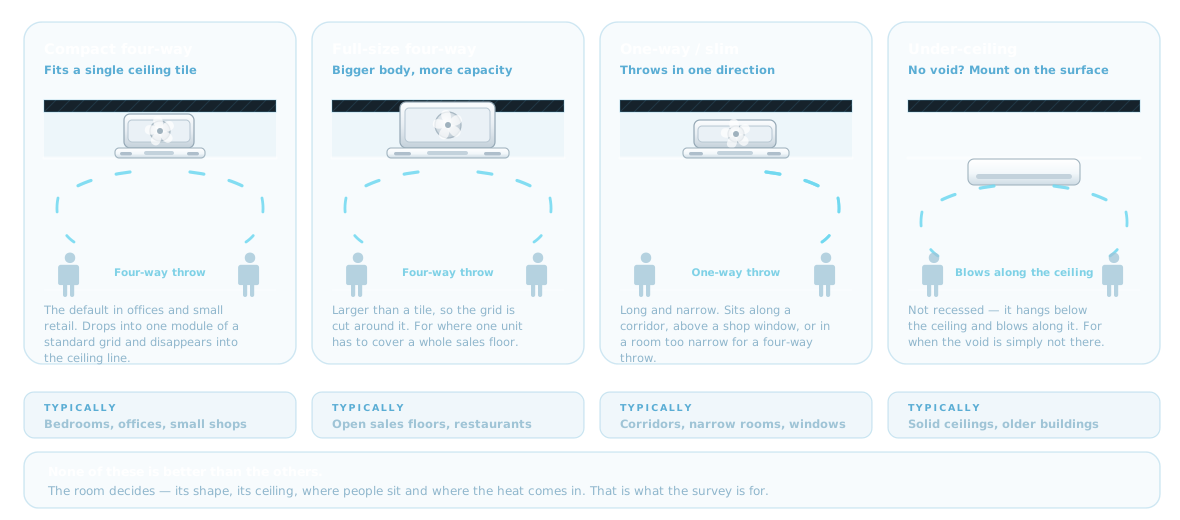
Four-way throw covers a roughly square plan far better than anything mounted on one wall, which always has a near side and a far side. Long, narrow rooms are the exception — that is what the one-way format is for.
One tile of ceiling
The common compact format is built to drop into a standard suspended ceiling module, which is why it is everywhere in offices. At home there is no grid, so it means cutting an opening and finding a void — the same problem as ducted, on a smaller scale.
Flush, and that is it
A flat square panel sitting level with the ceiling. More visible than a ducted grille, far less so than a wall unit, and it sits on the ceiling rather than in your eyeline.
Usually a pump, not gravity
Most cassettes lift their condensate with a small pump before it can fall away to a waste. Pumps are the part that fails, so ours get tested at commissioning and checked at every service.
It heats, and it heats downwards
Warm air wants to stay at the ceiling, which is the one thing a ceiling unit has to fight. Good cassettes swing the louvres steeper in heating to push it down. It is worth asking about, because not all of them do it well.
Cassettes in a house
Cassettes used to be a commercial fitting that occasionally turned up in a house. That has changed, mostly because slim formats now fit voids that would never have taken one.
Flat roofs, plenty of glass, and a build-up that often has room for a slim unit. A cassette in the middle of a single-storey extension covers it far more evenly than a unit on one wall.
A cassette is on the ceiling, above your eyeline, and it is a flat square rather than a moulded box. In a room with limited wall space or a lot of glazing, that can be the deciding factor.
Central positions with air needed in several directions at once — exactly what four-way throw is for, and a place where nobody sits still long enough to mind.
Slim cassettes need less depth than a concealed ducted unit with ductwork on top of it. Where the void is tight, a cassette is often the recessed option that actually fits.
Over a bed. A cassette above a bed puts you underneath the return air path and, in heating, under a downward throw — and the fan is closer to your head than it would be on a wall. In a bedroom we will usually steer you to a wall unit or a ducted grille and position it so the air never crosses the pillow. Cassettes also need a real hole in a real ceiling: on a solid ceiling, or a room below a bathroom, the honest answer is often an under-ceiling unit or a wall unit instead.
In a shop, a café or an office
This is the cassette’s home ground. Suspended ceilings, square floor plates and a need for air that reaches everybody rather than blasting the nearest person.
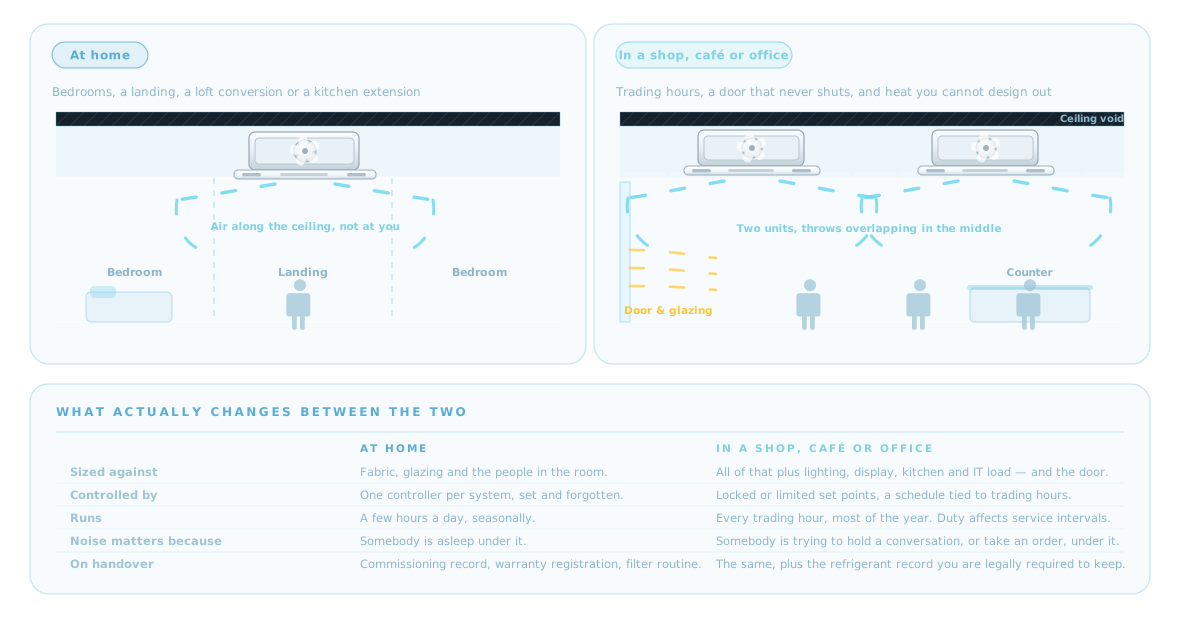
In premises with a standard grid, a compact cassette drops into a module and the ceiling line is unbroken. Service means lifting a tile. Nothing about it says ‘plant’ to a customer.
On an open sales floor, two cassettes with overlapping throws give a far more even room than one large unit working hard in the middle. It also means you are not shut when one needs attention.
Four-way throw is ideal over seating — but a cassette directly above a table is a complaint waiting to happen. We lay them out against the actual furniture plan, not the floor plan, and keep the kitchen on its own unit.
A cassette recirculates the air already in the room. It does not ventilate. Where a premises needs fresh air — and many commercial ones are required to have it — that is a separate system, and we will tell you where the line is rather than let you assume.
As the operator you are responsible for using qualified engineers, keeping an equipment record for each system, and having leak checks carried out at a frequency set by the system’s CO₂-equivalent refrigerant charge — not by its size in kilowatts. Larger systems also fall under TM44 air conditioning energy inspections. We work out which of your systems are in scope and put them on a schedule. There is more detail on the retail & light commercial page.
Four shapes, and what each one is for
‘Cassette’ covers several quite different units. Which one suits depends on the shape of the room and what is above the ceiling, and it is one of the first things the survey settles.
It hangs from the roof, not from the ceiling
The commonest misunderstanding about a cassette is that it sits in the ceiling. It does not. It hangs above the ceiling on four threaded rods fixed into the structure, and the ceiling is simply cut around it — which is why the thing that decides whether it works is what is over your head, not what the ceiling is made of.
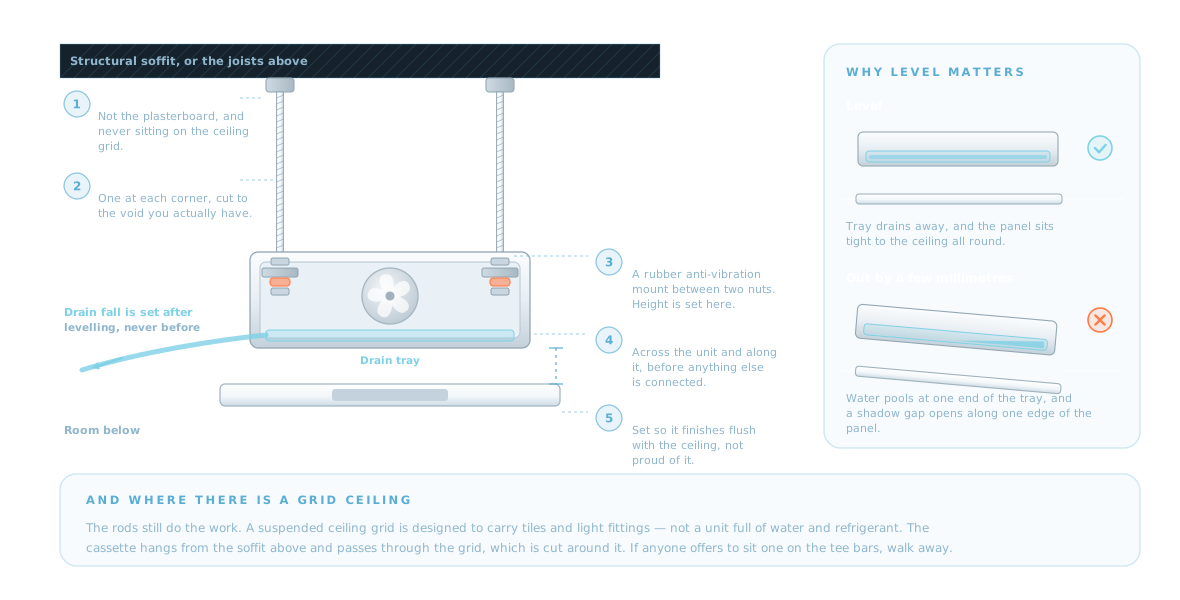
Concrete soffit, steel, or the joists — never plasterboard, and never the ceiling grid. A cassette full of refrigerant, water and a fan is not a light fitting, and a tee bar is not a structural member.
The bracket is sandwiched between a nut above and a nut below with an anti-vibration mount in between. That is where the height gets set, and it is also what stops fan hum travelling into the building as structure-borne noise.
Across the unit and along it. Out by a few millimetres and the drain tray holds water at one end instead of emptying, and a shadow gap opens along one edge of the panel that you will see every day for the next fifteen years.
Once the body is level and at the right height, the decorative panel is fitted so it finishes flush with the finished ceiling rather than proud of it. Rushing this is exactly how a cassette ends up looking like an afterthought.
In a commercial unit with a suspended ceiling there is usually a concrete soffit or a steel frame right there to hang from, and plenty of room to work. In a house the structure is joists, and they run one way — so where the cassette wants to go and where the rods can actually be fixed are not always the same place. That is a survey question, not a fitting-day question, and it is the single most common reason we move a cassette a few hundred millimetres from where it was first drawn.
Four things we would rather you heard from us
Every system type has a downside. These are the ones that come up after installation if nobody mentions them before.
In a shop with a grid that is trivial. In a house it means cutting plasterboard, working around joists and services, and making good. Where that is not sensible, an under-ceiling or wall unit does the same job.
Less visible than a wall unit, more visible than a ducted grille. If the ceiling has to be completely uninterrupted, ducted is the honest recommendation.
Condensate pumps do fail, and when they do the water has nowhere to go. It is the main reason a cassette gets serviced rather than ignored, and it is the first thing we test.
Warm air rises, so a ceiling unit is working against physics in winter. It is manageable with the right unit and the right louvre setting, but it is a real difference from a wall unit at low level and we would rather you heard it from us.
Not sure which shape of indoor unit suits the room? Choosing your system walks through the options, why sizing matters explains what goes wrong when it is guessed, and the range page compares every brand we fit on one scale.
We are not tied to one manufacturer
This page is about a type of indoor unit rather than a particular product, because the shape of the unit is a design decision and the badge on it is a separate one.
Every manufacturer we install










Every one of these makes a ceiling cassette, and we are an approved installer for all of them. Which we put in your ceiling is decided by the room, the void and the budget — not by whose van we happen to be driving. The range page compares them on one scale.
Why have ArcticNord fit it?
Most of what decides whether a concealed system is any good happens before anyone picks up a spanner — and all of it is hidden by the time you see the finished job.
Both of these live in a ceiling, and a ceiling is the one part of a building you cannot easily change your mind about. We measure the void, find the joists and the services already in it, and agree where the access is — before you have a price, not after the plasterboard is down.
We calculate the load from the glazing, the orientation, the insulation, the lighting and the people and equipment in the room. Rules of thumb produce systems that short-cycle, blow cold at whoever is nearest and cost more to run.
Refrigerant work is legally controlled. Our engineers are F-Gas registered, the charge is weighed to the actual pipe run rather than estimated, and the commissioning record is handed over on completion — which is also what keeps the manufacturer warranty alive.
Concealed kit costs more than a wall unit and is harder to service. Where the void is not there, or the room does not justify it, we say so. We would rather lose a job than fit something that has to be apologised for later.

Common questions
What is a ceiling cassette?+
An indoor unit that sits up inside the ceiling with only a flat panel showing. It draws room air up through the centre of that panel and blows it back out through louvres around the edges, along the ceiling, typically in four directions.
Why four directions rather than one?+
Because it makes the room even. Air thrown along the ceiling entrains room air and mixes as it travels, so by the time it reaches head height it is no longer a cold jet. A unit blowing one way always has a near side that is too cold and a far side that never gets there.
Will it fit in a normal house ceiling?+
Sometimes. The compact and slim formats need less depth than a concealed ducted unit, so they will fit voids that ducted will not — but there still has to be a void, joists in the right places, and a route for the drain. We measure before we quote, and if it will not fit we say so.
Can I have one over my bed?+
You can, and we would usually advise against it. You would be sitting under the return path and, in heating, under the downward throw. In bedrooms we normally suggest a wall unit or a ducted grille positioned so the air never crosses the bed.
Do cassettes bring in fresh air?+
No, not on their own. A cassette recirculates and conditions the air already in the room. Ventilation is a separate system. Some units have a provision for a fresh air connection, but that is a design decision made at survey, not something to assume.
Is the condensate pump a problem?+
It is a moving part in a ceiling, which is worth respecting rather than worrying about. Ours are tested at commissioning, the drain is set out with a proper fall beyond the pump, and the pump is checked at every service. Problems come from installations where none of that happened.
How many do I need for my shop?+
That comes out of a heat load calculation, not floor area — glazing, lighting, equipment, footfall and the door all matter. Very often the answer is two smaller units rather than one large one, because the coverage is more even and you are not closed if one needs attention. There is more on this on the sizing page.
Do you cover my area?+
We install across Nottinghamshire, Derbyshire, Lincolnshire, Leicestershire, South and West Yorkshire. If you are near the edge of that, call and ask — we will tell you straight.
Where the ceiling has to be completely uninterrupted, look at ducted air conditioning. For premises rather than houses, start at retail & light commercial. For wall units, the Daikin Stylish and Midea Breezeless E are the two we fit most.
Tell us about the room and the ceiling
Whether a cassette is right comes down to the shape of the room, where people actually sit, and what is above the plasterboard. Send us the details or call, and we will come and look before anybody talks about money. If a ducted system or a plain wall unit is the better answer, we will tell you that instead.