 Approved installer
Hisense Multi Function II — one outdoor unit, three jobs
Most homes that want air conditioning, a heat pump and hot water end up with two or three separate systems, two or three outdoor units and two or three sets of pipes. This is one box. It cools and heats your rooms, runs your underfloor heating and radiators, and fills a 230 litre cylinder — and in summer it makes that hot water out of the heat it has just taken out of the house.
F-Gas registered engineers • Free design & heat-loss survey • East Midlands, Lincolnshire & Yorkshire
Three systems’ worth of work, one outdoor unit
Air-to-air for the rooms, air-to-water for the wet heating, and domestic hot water — all from the same compressor, the same pipes and the same electrical supply.
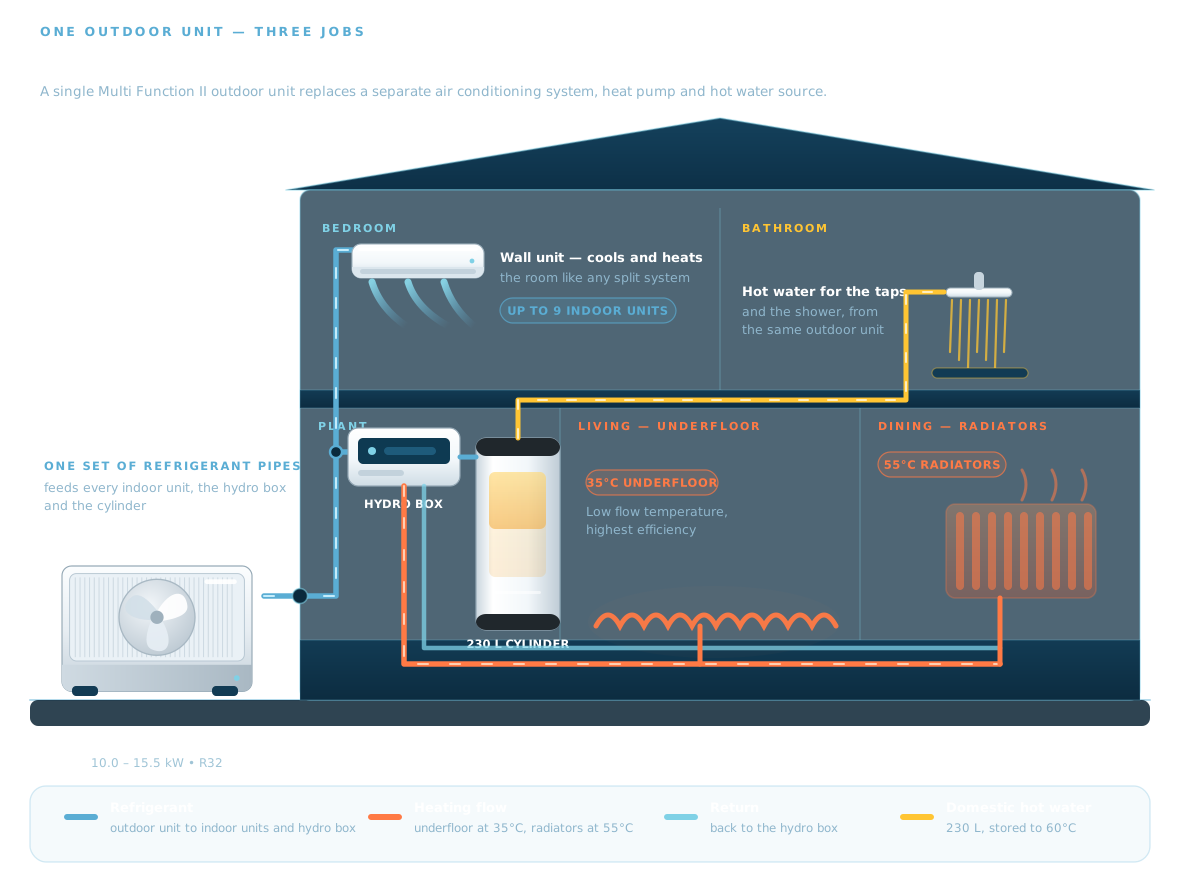
Nominal cooling from 10.0kW to 15.5kW across four outdoor units, with heating output up to 18kW at maximum. That is a whole house, not a single room — and the sizing comes from a heat loss calculation, not from the brochure.
Up to nine indoor units
Six, eight or nine indoor units depending on which outdoor unit you have, at a connection ratio of 50–150%. Wall, cassette or ducted — whatever suits the room.
230 litres, stored
A proper cylinder, not an instantaneous heater — stored to 60°C, or 75°C with the electric heater for a sterilisation cycle. Enough for a family bathroom and an en-suite back to back.
ηs up to 174% at 35°C
A++ seasonal heating efficiency at a 35°C outlet, A+ at 55°C. Air-to-air SCOP runs to 4.85 and SEER to 8.4 — the low flow temperature is where the money is.
Rated to −25°C
It carries on heating at −25°C ambient, and it will still make hot water down there too. The compressor oil is warmed electromagnetically rather than by a belt heater — 40% less power, and up to temperature 50% faster.
R32, with a detector
Roughly a third of the global warming potential of R410A, a smaller charge for the same capacity, and a leak-detection and shut-off chain built into the system rather than bolted on.
In summer, the hot water is free
Cooling a house is a heat-moving exercise. The heat comes out of your rooms and, in every conventional system, goes straight into the garden. This one gives it somewhere useful to go.
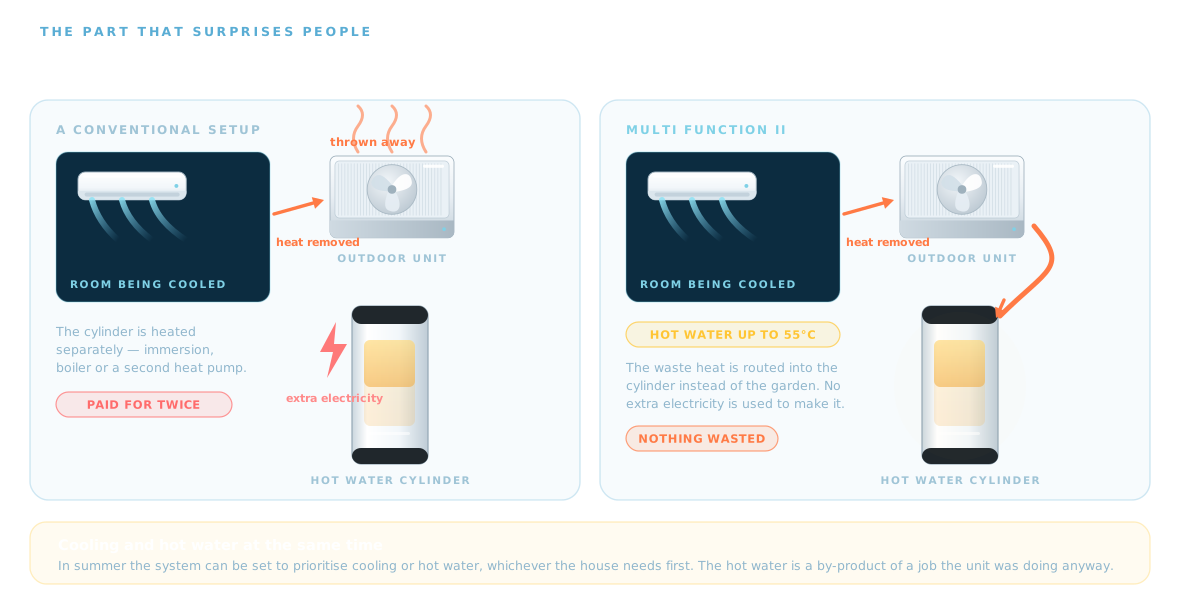
The recovered heat will take a cylinder to 55°C on its own. Above that the immersion tops it up, and the sterilisation cycle takes it to 75°C.
Cooling first or hot water first — the system can be set either way, so a hot Saturday afternoon behaves differently from a Tuesday morning.
Because the water side is cooled by refrigerant rather than through a second water heat exchanger, it reaches lower evaporating temperatures — which is what actually pulls moisture out. Humidity is adjustable from 35% to 90%.
The same water side will heat a swimming pool, which is normally a separate heat pump and a separate outdoor unit.
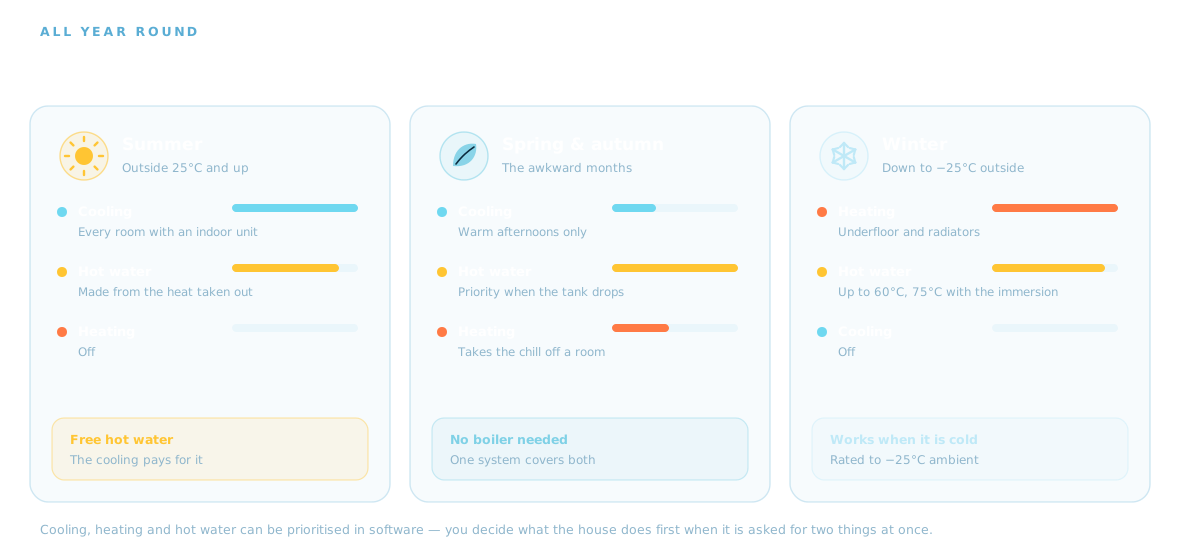
What it is doing in July, in October and in January
The reason to buy one system rather than three is that the seasons do not line up neatly. Something is always needed, and it is rarely everything at once.
Underfloor at 35°C and radiators at 55°C, together
Almost every real house is a mixture: underfloor in the extension, radiators everywhere else. Run them both off one temperature and one of them is always wrong.
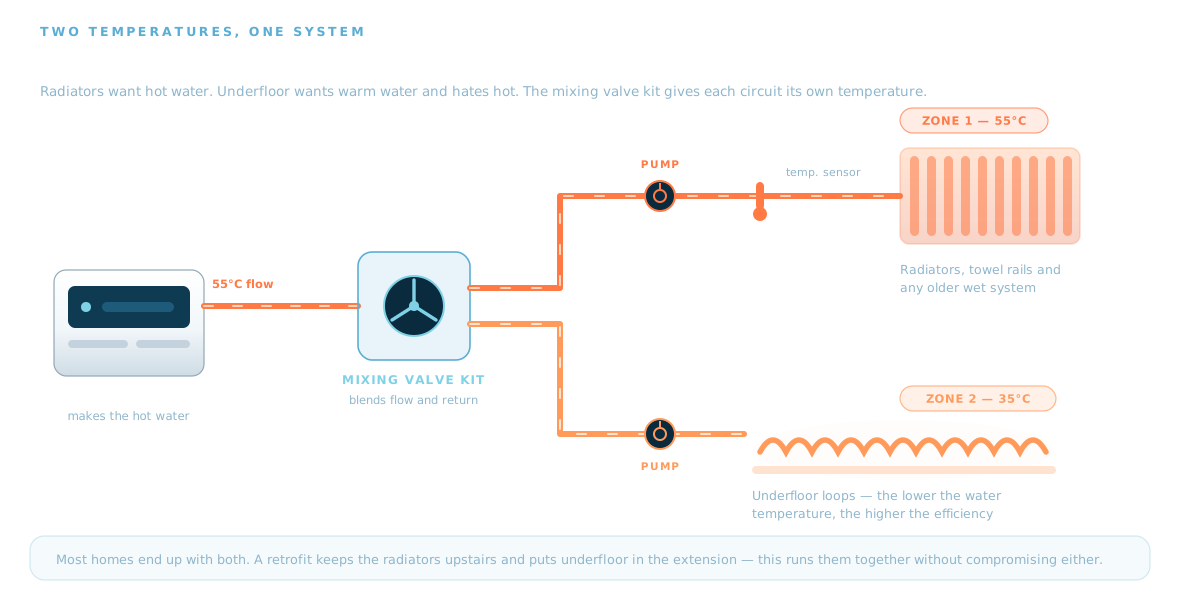
Space heating flow is adjustable across the whole band, so the system can be tuned to the emitters you actually have rather than the ones the brochure assumed.
ηs of 165–174% at a 35°C outlet against 112–120% at 55°C. Every degree you can take off the flow temperature is money.
A room-by-room heat loss tells us whether your radiators work at 45°C or 55°C. If several need upsizing, that goes in the quote — not in a surprise after you have signed.
Sound pressure of 26–29 dB(A) at the hydro box and cylinder unit. It can live in a utility room without dominating it.
The outdoor unit does not have to be anywhere near the house
Long pipe runs are the difference between an outdoor unit on the patio and an outdoor unit you never see or hear.
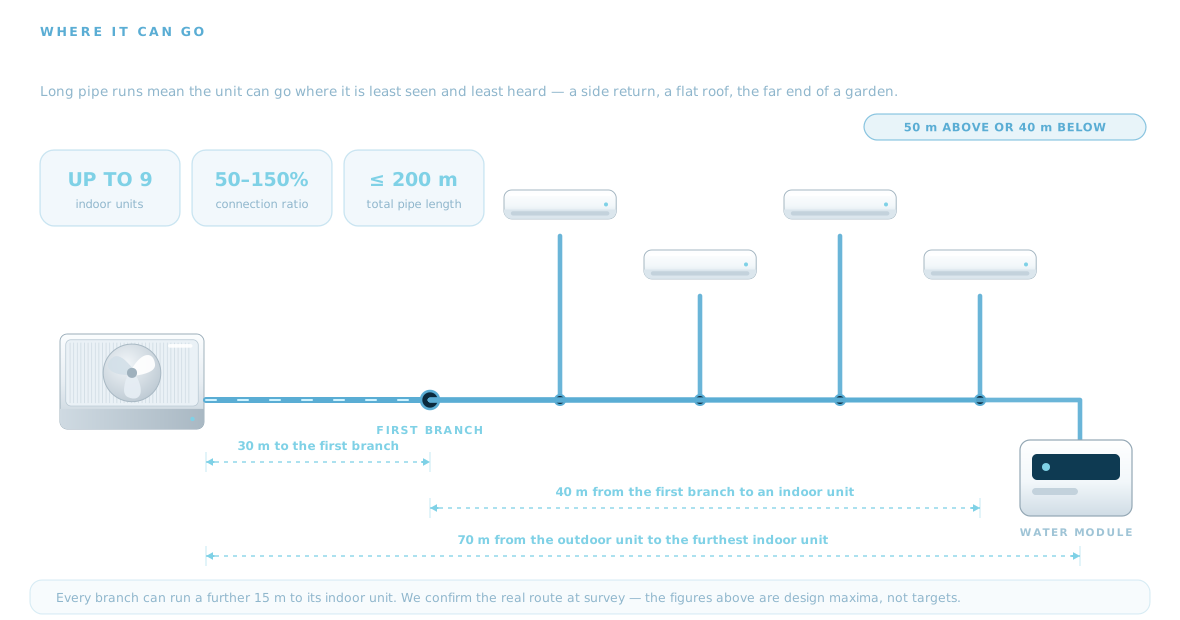
A single-fan outdoor unit at 845 × 1100 × 426mm and 83–96.5kg. It goes up in a lift and through a normal doorway, which matters more than it sounds on a flat or a town house.
Where discharge air would hit a wall or a fence, an optional guide redirects it up, left or right so the unit still breathes properly in a narrow side return.
Sound pressure at the outdoor unit. Siting, mounting and the distance to your neighbour’s window all get considered at survey — not after.
220–240V single phase across the whole range, so most homes need no supply upgrade. We check the incomer and the consumer unit at survey.
A mildly flammable refrigerant, treated like one
R32 is where the industry has gone, for good reasons. It is also flammable at concentration, and the honest way to sell it is to explain what happens if it ever leaks.
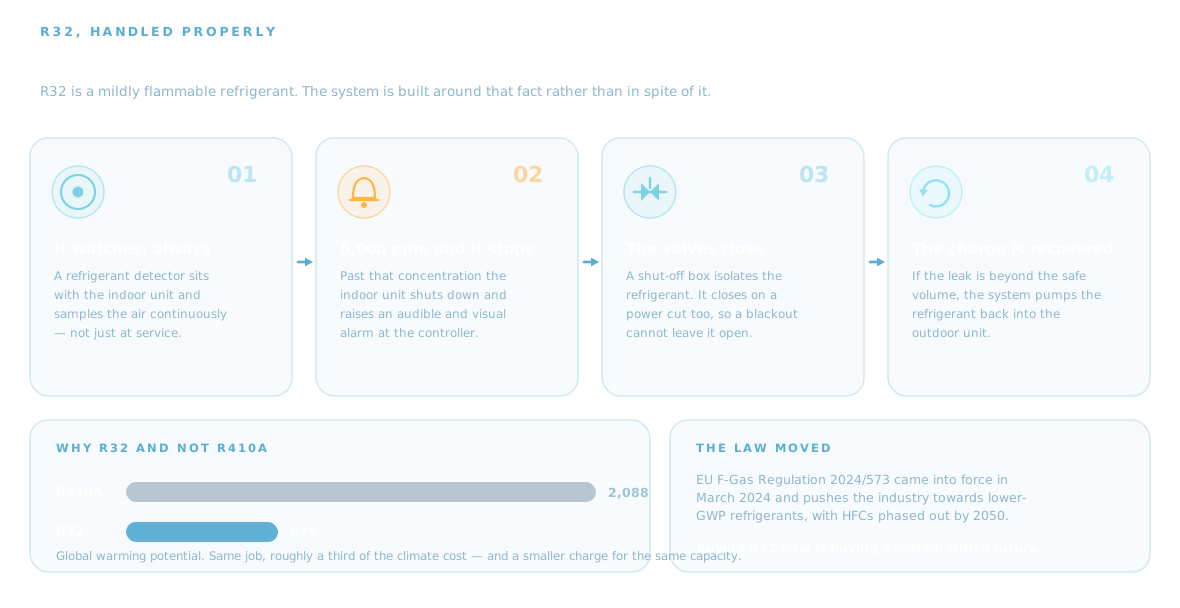
A conventional split system has refrigerant in one or two rooms. A whole-house system has it in more of them, and a longer pipe run to leak from. That is precisely why the detector, the shut-off box and the recovery sequence are part of the product rather than an accessory — and why the installation has to be done by F-Gas registered engineers who pressure-test and document it properly. We weigh the charge to the actual pipe run rather than estimating it.
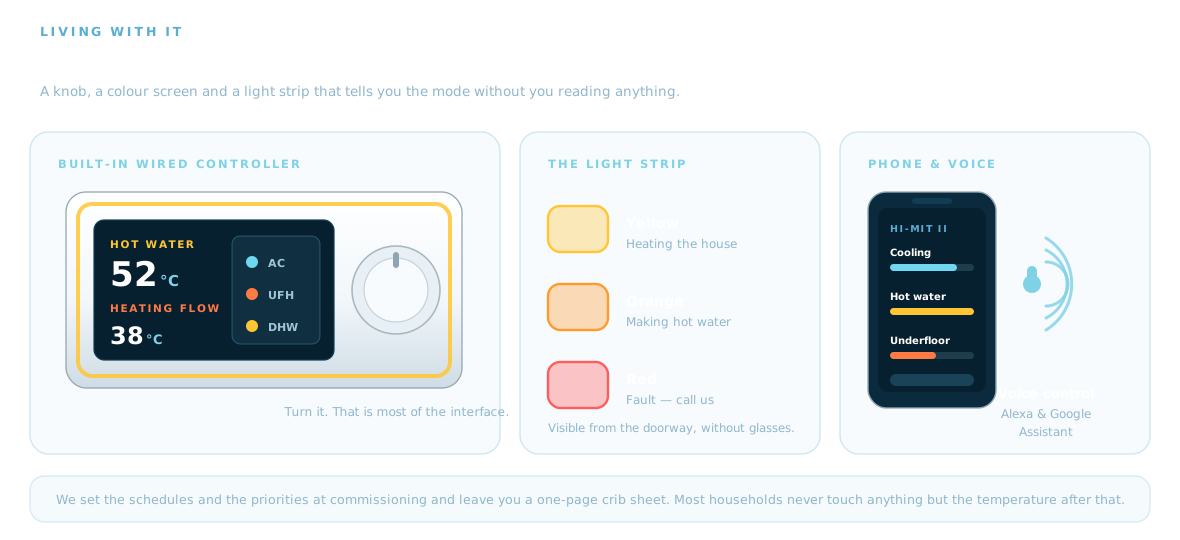
A knob, a screen and a light you can read from the doorway
Whole-house systems fail in the living room, not on the test bench. If the controls are baffling, the system gets left on one setting and half the efficiency goes with it.
Four outdoor sizes, two ways to do the hot water
Headline numbers below. The one you need comes out of a heat loss calculation and a hot water demand, not from a price list.
Hydro box and a 230 litre cylinder in one floor-standing tower, 1885 × 595 × 625mm. The usual choice where there is a utility room or a garage.
890 × 520 × 320mm and 50kg, for houses that already have a cylinder worth keeping or need the tank somewhere else.
Domestic hot water SCOP of 2.95 on average, 3.50 in warmer conditions and 2.40 in colder ones, for a tank held at 50°C or above.
Cooling −10°C to 52°C, heating down to −25°C, hot water −25°C to 43°C, heat recovery 12°C to 43°C.
This suits a house that wants cooling and is replacing or upgrading its heating — a renovation, an extension, a new build, or a home coming off oil or LPG. If you only want air conditioning in two bedrooms, a multi-split is cheaper and simpler and we will tell you so. If your radiators are sized for an 80°C boiler and you are not changing them, the sums do not work, and we would rather establish that at survey than after the scaffolding is up.
Why have ArcticNord fit it?
A system that does three jobs has three ways to be designed badly. Most of what decides whether you get the efficiency on the label happens before anyone picks up a spanner.
We calculate the loss for every room and the hot water demand for the household, then size from that. Oversizing a system like this is expensive twice — once to buy and again every day it runs.
We measure your radiators and tell you which ones work at a heat pump flow temperature. Where they need changing it is in the quote, in writing, before you commit.
Refrigerant work is legally controlled. Our engineers are F-Gas registered, the charge is weighed to the pipe run rather than guessed, and the commissioning is documented — which is also what keeps the manufacturer warranty alive.
We do air conditioning, heat pumps and hot water. Nobody gets to blame the other trade when the cooling is fine but the cylinder never recovers.

Common questions
What is a Multi Function II system?+
It is one outdoor unit that does three jobs that would normally need three separate systems: air conditioning through wall or ceiling indoor units, wet heating through underfloor loops or radiators, and domestic hot water in a 230 litre cylinder. Everything runs off one set of refrigerant pipes and one electrical supply.
Can it really run air conditioning and radiators at the same time?+
Yes. The outdoor unit serves refrigerant indoor units and a water side at once, and you can tell it which to prioritise when the house asks for two things together. In practice the sequencing is set at commissioning and you never think about it again.
Does it replace my boiler?+
In a lot of houses, yes — but only if the radiators or underfloor loops can deliver the heat at the flow temperature the system runs at. It will put out water up to 60°C, but the efficiency is far better at 35°C to 45°C. We do a room-by-room heat loss first and tell you honestly which emitters would need changing. If the answer is most of them, we will say so.
How does it make hot water for nothing in summer?+
When it is cooling, the heat it takes out of your rooms has to go somewhere. A conventional system throws it into the garden. This one can route it into the hot water cylinder instead, up to 55°C, without drawing any extra electricity to do it. You are heating water with heat you have already paid to move.
How cold can it get before it stops heating?+
It is rated to keep heating down to −25°C outside, which is well below anything the East Midlands sees. Output does fall as it gets colder, which is exactly why the heat loss calculation matters more than the headline kilowatt figure.
How many rooms can it do?+
Between six and nine indoor units depending on which of the four outdoor sizes you have, at a connection ratio of 50 to 150 per cent. Pipework can run up to 70 metres from the outdoor unit to the furthest indoor unit, so the unit does not have to sit next to the house.
Does it qualify for the Boiler Upgrade Scheme?+
Air conditioning — the air-to-air side — has never been eligible. Grant eligibility for the water side depends on the specific model being MCS certified at the time you install it, so we check the current listing before we quote rather than promise you a grant that may not apply. We would rather lose the job than get that wrong.
Do you cover my area?+
We install across Nottinghamshire, Derbyshire, Lincolnshire, Leicestershire, South and West Yorkshire. If you are near the edge of that, call and ask — we will tell you straight.
Only after cooling? The Daikin Stylish and the Midea Breezeless E are the wall units we fit most, and the full Bosch range runs from a bedroom to a commercial cassette. Only after heating? That is ArcticNord Heat. Still weighing up brands? See them all compared on one scale. Cannot have an outdoor unit at all? See the Panasonic RAC Solo.
Find out whether it suits your house
The AC Selector prices room-by-room air conditioning, so it cannot cost a whole-home system. Send us the details or call instead, and we will talk through what you have now, what you are changing, and whether one outdoor unit really is the right answer for it.