 Approved installer
Panasonic air conditioning: the whole range, explained
Panasonic build one of the most consistent domestic ranges in the industry: wall units from 2.0 to 7.1kW, floor consoles, ceiling cassettes and concealed ducted units, and a multi-split that runs five rooms from one outdoor box.
F-Gas registered engineers • Free design & heat-load sizing • East Midlands, Lincolnshire & Yorkshire
One range, six ways into a room
Everything below is an inverter-driven reversible heat pump running on R32. It heats as well as it cools. What changes is where the indoor unit goes, how wide it is, how much air it moves, and how many rooms one outdoor unit has to serve.
Etherea on its quietest setting, below the noise floor of most bedrooms, and the number that decides whether air conditioning is tolerable somewhere you sleep. The super-compact units sit at 20dB(A), which in practice you will not tell apart.
A+++ for cooling and heating on Etherea
Both halves of the label, not just the one manufacturers like to quote. Inverter-driven, so it modulates instead of switching on and off, and in heating mode it returns several units of heat per unit of electricity.
2.0kW to 9.0kW across the range
From a single bedroom up to one outdoor unit feeding five rooms at once. Same manufacturer, same app, same engineer.
nanoe™ X, running whenever the unit runs
Hydroxyl radicals carried in nano-sized water particles, released into the room. Panasonic publish test work on odours, certain bacteria and viruses, mould, allergens and pollen. It works in fan-only mode, so it is not just a summer feature.
It heats as well as it cools
Every unit here is a reversible air-to-air heat pump. Panasonic quote heating operation down to −25°C on the CZ super-compact: well past anything a Nottinghamshire winter produces.
Built-in Wi-Fi, not an add-on module
Wi-Fi is inside the wall units rather than sold as an accessory you discover you need afterwards, and one app handles every unit in the house.
The four that go on your wall
They all do the same job. The differences are how quiet they are, how much wall they take up, how efficient they are over a season, and whether they treat the air as well as move it.
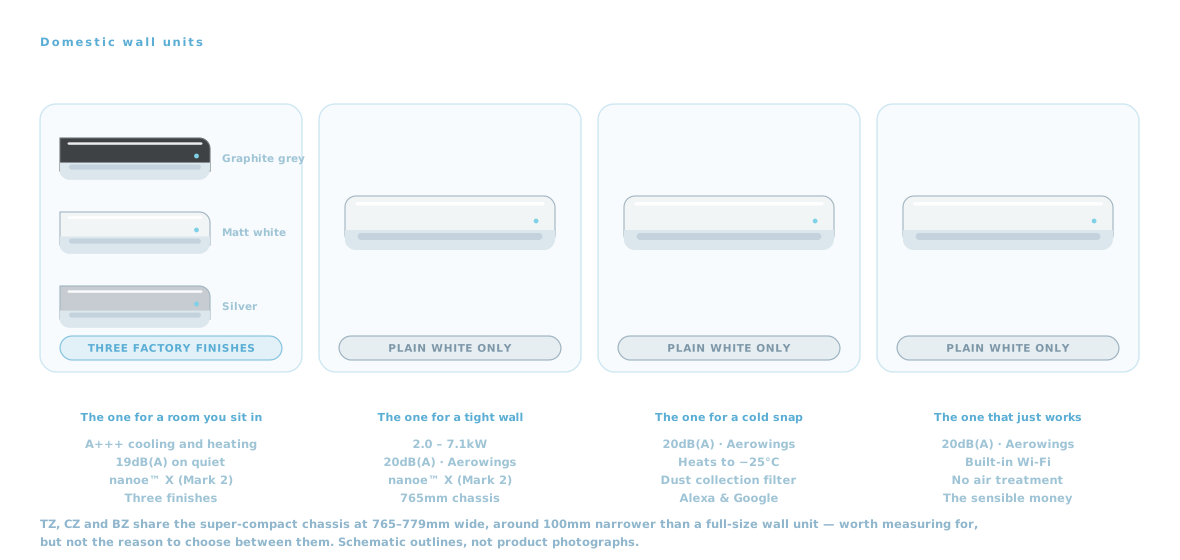
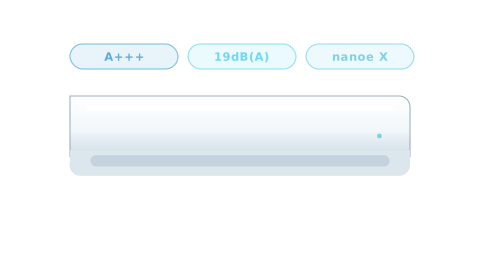
Etherea with nanoe™ X
The one to put in a bedroom. Rated A+++ for both cooling and heating, 19dB(A) on its quietest setting, and fitted with the Mark 2 nanoe™ X generator rather than a filter alone. Six outputs from 2.0 to 7.1kW cover everything from a box room to a knocked-through ground floor.
It is also the only wall unit in the range with a finish choice, graphite grey, matt white or silver, which matters when the unit is going somewhere it will be looked at every day.
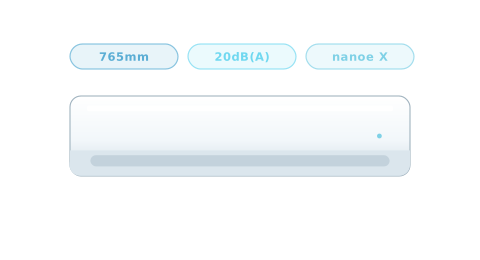
TZ super-compact with nanoe™ X
Only 765mm wide on the 2.0 to 5.0kW models, which is 100mm or more narrower than most mid-range wall units. That sounds like a detail until you are trying to fit one above a door head, between a window reveal and a corner, or on the only clear panel of wall in a loft conversion.
It is not a stripped-back unit either. It carries the same Mark 2 nanoe™ X generator as Etherea, Aerowings twin flaps for airflow direction, 20dB(A) quiet operation and built-in Wi-Fi. Seven outputs up to 7.1kW.
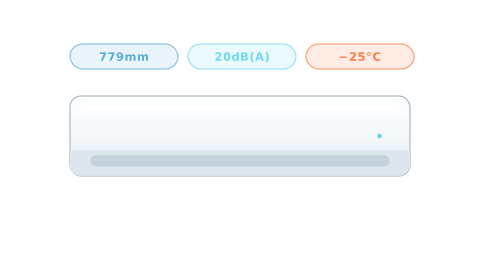
CZ super-compact
779mm wide, 20dB(A), Aerowings and a dust collection filter, with heating rated to keep working down to −25°C outside: the widest cold-weather envelope on this page. Built-in Wi-Fi with Alexa and Google Assistant support as standard.
No nanoe™ X. If the room needs cooling and heating done well and quietly and the air treatment is not the reason you are buying, this is where the money stops being worth spending.
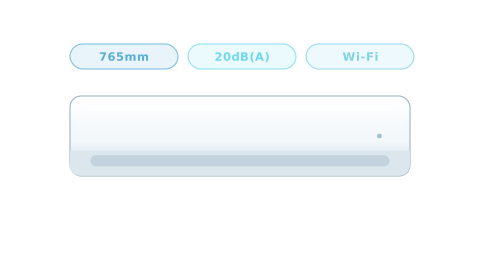
BZ and FZ super-compact
The value end of the range, on the same 765mm super-compact chassis: Aerowings, 20dB(A) and built-in Wi-Fi, without the air treatment or the top-tier seasonal efficiency.
Sensible in a room that is used in bursts, a garden room, a workshop, a guest bedroom, or where the budget is better spent on getting three rooms done properly than one room done beautifully.
Etherea for bedrooms, nurseries and home offices, where the quiet and the seasonal efficiency compound over years. TZ where the wall space genuinely will not take a full-width unit, and it is worth measuring before assuming it will. CZ or BZ where the room needs to be comfortable rather than exceptional. We size from a room-by-room heat load first, because an oversized unit short-cycles, dehumidifies badly and costs more to run, and no amount of choosing the right model afterwards fixes that.
Three other ways into the room
A wall unit is the cheapest and easiest indoor unit to install, and in plenty of rooms it is also the wrong one, a room with glazing on every wall, an open-plan kitchen with a ceiling grid, a bedroom where the owner will not accept a visible box.
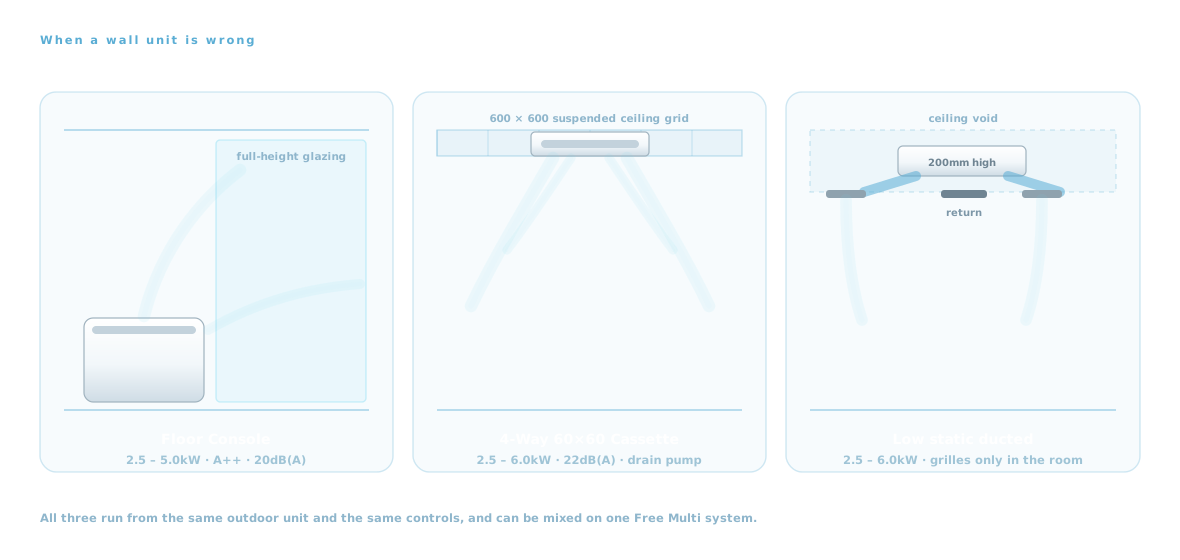
2.5, 3.5 and 5.0kW. Stands at skirting level under a window rather than hanging above it, which suits rooms with full-height glazing, sloping ceilings or a wall you are not allowed to fix into. A++ seasonal efficiency, 20dB(A), and the Mark 3 nanoe™ X generator.
2.5 to 6.0kW, four-way discharge, sized to drop straight into a 600×600 suspended ceiling grid in RAL 9010 white. 22dB(A) and a condensate pump built in, so it can be sited where gravity drainage would not reach.
2.5 to 6.0kW in an indoor unit only 200mm high, hidden entirely in a ceiling void and feeding flush grilles. Nothing visible in the room but the grilles, the usual answer in a bedroom where the owner does not want to see a unit at all.
On a Free Multi system the indoor units do not have to match. A cassette in the kitchen-diner, ducted in the master bedroom and wall units in the rest is one system, one outdoor unit and one app.
Cassette and ducted units are the same equipment we cover in more depth on the ceiling cassette and ducted air conditioning pages, which explain what each format needs from the ceiling.
One outdoor unit. Up to five rooms.
The alternative to five outdoor units bolted along the back wall is one outdoor unit and one set of penetrations, with up to five indoor units that each hold their own temperature to their own schedule.
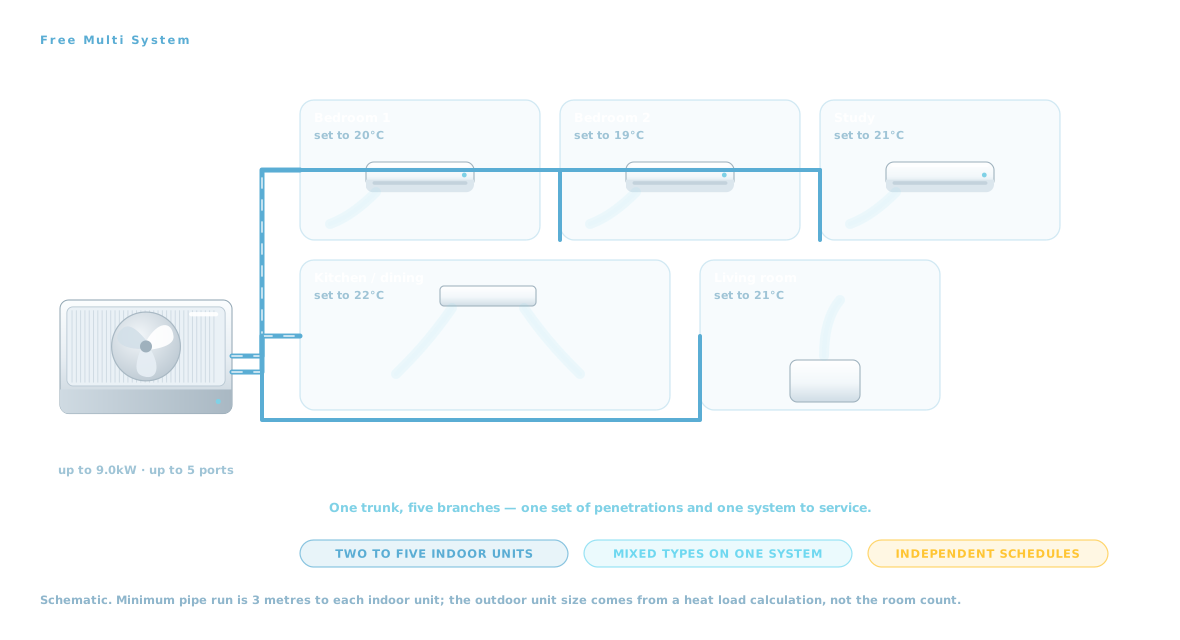
Outdoor units up to 9.0kW with up to five ports. The size follows the rooms and how many of them run at once, not the room count on its own, which is what the heat load calculation is for.
Every indoor unit has its own set temperature and its own weekly schedule. One bedroom cooling overnight while the rest of the house sits idle is normal operation, not a compromise.
Wall, cassette, ducted and floor console indoor units can share one outdoor unit, including Etherea units with nanoe™ X. The room chooses the format; the system does not care.
One outdoor unit, one set of holes, one condensate strategy and one system to service. On a terrace or a town house that is usually the deciding argument before efficiency is even discussed.
What it does to the air, and how you drive it
Two things Panasonic put across nearly the whole range rather than reserving for the flagship: an air treatment system that runs whenever the fan runs, and Wi-Fi built into the unit instead of sold as a module.
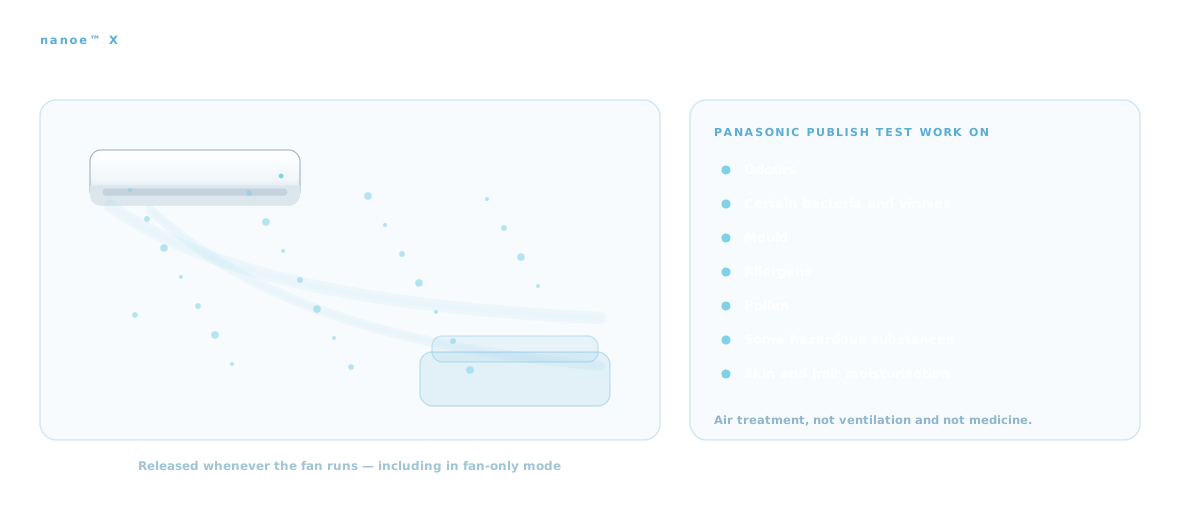
Hydroxyl radicals contained in nano-sized water particles, generated inside the indoor unit and carried into the room on the airflow. Panasonic publish test work on odours, certain bacteria and viruses, mould, allergens and pollen.
It is air treatment, not medicine and not ventilation. It will not fix a damp problem, a mould source or a house with no fresh air. Where the real answer is ventilation or insulation we will tell you that instead of selling you a bigger unit.
Wi-Fi is built into the wall units rather than added as an accessory. Weekly scheduling, per-room control, and Amazon Alexa and Google Assistant support, all through one app whether you have one unit or five.
Cassette and ducted installations can take a wired controller as well, which is usually what a rental property, a shop or an office actually wants, something on the wall that anyone can use without an app or a login.
Why have ArcticNord fit it?
Panasonic make good equipment. Most of what decides whether you get the performance on the label happens before anyone opens a box.
We calculate the load room by room and size from that. An oversized unit short-cycles, dehumidifies badly and costs more to run for ever, and no model choice afterwards undoes it.
Four separate systems or one outdoor unit feeding four rooms is a real decision with real money in it. We cost both where it is close, rather than quoting whichever suits us.
Whether the 765mm super-compact chassis or a full-width Etherea fits the wall you have in mind is a tape-measure question, and we ask it at survey rather than on installation day.
Where the outdoor unit goes, or where the two cores land, affects the noise, the efficiency, the elevation and occasionally your neighbours. It is agreed and drawn before anyone drills.
Refrigerant work is legally controlled. Our engineers are F-Gas registered, the charge is weighed to the actual pipe run rather than estimated, and the commissioning is documented, which is also what keeps the manufacturer warranty alive.
If your rooms want a Free Multi rather than four singles, or a cassette rather than a wall unit, or nothing at all until the loft is insulated, that is what the survey will say.

Common questions
Which Panasonic wall unit should I have?+
Etherea if the room is one you sit quietly in. It is the 19dB(A) unit, rated A+++ for both cooling and heating, with nanoe X and a choice of graphite grey, matt white or silver. TZ super-compact if the wall space is tight, because at 765mm wide on the 2.0 to 5.0kW models it is one of the narrowest units anyone makes, and it still carries nanoe X. CZ or BZ where the room simply needs to be cooled well and quietly and the budget is better spent elsewhere. We size the room properly before recommending any of them.
Does it heat as well as cool?+
Every unit on this page is a reversible heat pump, so yes. Panasonic quote heating operation down to −25°C on the CZ super-compact, and in winter these typically return several units of heat for each unit of electricity, which is why running one is usually cheaper than an electric heater and often competitive with gas.
What is nanoe X?+
Panasonic’s air treatment system. It generates hydroxyl radicals contained in nano-sized water particles and releases them into the room, and Panasonic publish test work on their effect on odours, certain bacteria and viruses, mould, allergens and pollen. It runs whenever the unit runs, including in fan-only mode, so it works outside the cooling season too. It is a genuine feature rather than a sticker, but it is not a substitute for ventilation, and we would not sell you a unit on it alone.
Can one outdoor unit do more than one room?+
Yes. That is a Free Multi system. One outdoor unit runs two to five indoor units, each with its own temperature and its own schedule, and they do not have to be the same type: wall units in the bedrooms, a cassette in the kitchen-diner, a console in a room with no usable wall. One outdoor footprint, one set of penetrations, one system to service. It is almost always the right answer once you want more than two rooms done.
When is a cassette or a ducted unit worth it?+
When a wall unit is wrong for the room rather than when the budget is bigger. A cassette suits an open-plan space with a suspended ceiling; a low static ducted unit hides in a 200mm ceiling void and shows nothing but grilles, which is usually what someone means when they say they do not want to see a unit at all. Both cost more to install than a wall unit because of the builder’s work around them.
Do I need planning permission?+
For most domestic installations in England the outdoor unit falls under permitted development, subject to conditions on siting, size and noise, but that changes if you are in a conservation area, on a listed building, or in a flat. We check your address before quoting rather than after, and we will tell you if we think you need to ask.
What warranty comes with it?+
Panasonic set their own warranty terms and they vary by product and by who installs it, so we confirm the exact cover in writing with your quotation rather than printing a number here that might not apply to your unit. Whatever the length, it depends on the system being commissioned properly and documented, which is part of every installation we do.
Comparing brands rather than models? Nowhere to put an outdoor unit? That is the Panasonic RAC Solo. The range comparison puts every manufacturer we fit on one scale. The full Bosch range and Daikin range are laid out the same way, and if you want heating and hot water from the same outdoor unit, that is the Hisense Multi Function II.
Find out which Panasonic your rooms actually need
Our online selector prices single split systems, so it cannot cost a mixed Free Multi. Send us the rooms, sizes, aspect, glazing, and whether there is anywhere an outdoor unit could legally go, or call, and we will tell you what suits the building before we tell you what it costs.