Ducted air conditioning — grilles in the ceiling, nothing on the wall
A ducted system hides the indoor unit above the ceiling and pipes the air out to each room through insulated ductwork. In the room itself there is a slim grille and no equipment at all. That is the whole appeal — and it is also why a ducted system has to be designed properly before anybody agrees a price, because almost everything that decides whether it works is hidden by the time you see it.
F-Gas registered engineers • Free design survey • East Midlands, Lincolnshire & Yorkshire
One unit above the ceiling, several rooms below it
A fan coil sits in the void. Room air comes back to it through one large return grille, passes a filter and a coil, and is pushed out along ducts to a supply grille in each room. The refrigerant pipes carry on out to an outdoor unit in the usual way.
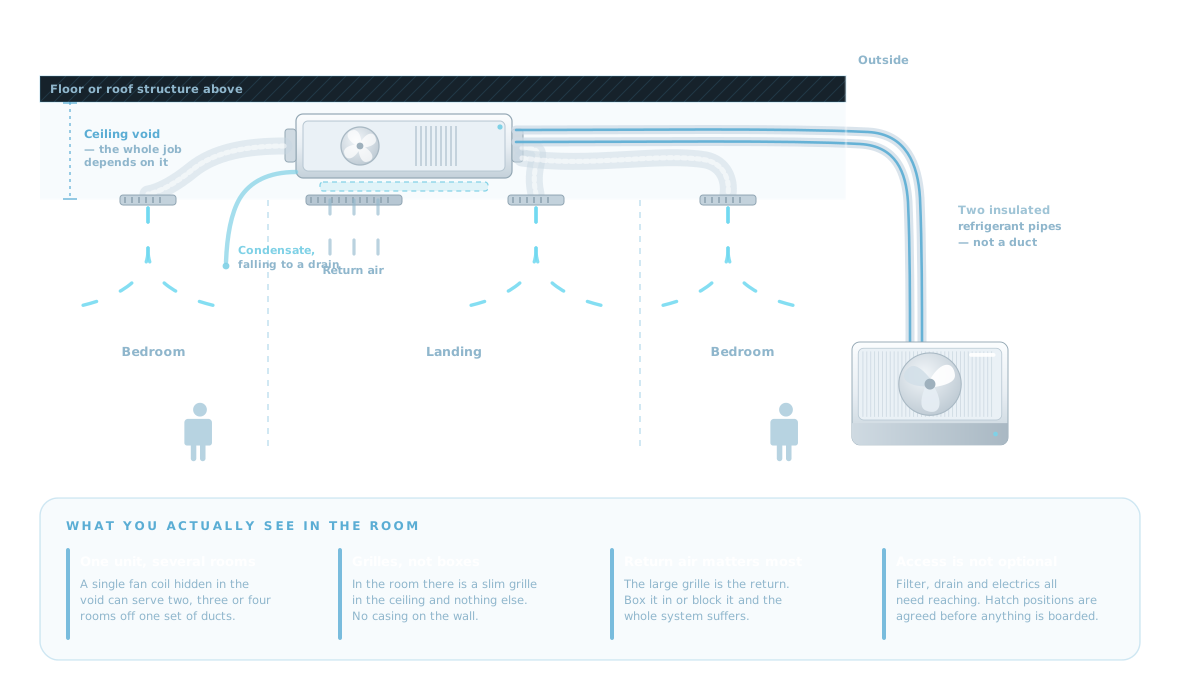
No casing on the wall, no box in the corner of the ceiling. A slim grille, painted to match if you want it to, and that is the lot. In a bedroom with a made bed and a plain ceiling, most people cannot tell there is air conditioning until it comes on.
Two, three or four rooms
One fan coil can serve several rooms off one set of ducts, which is often cheaper and always tidier than a wall unit in each. The catch is that they share a system, so they usually share a temperature too.
Static pressure
Every metre of duct, every bend and every grille makes the fan work harder. Units are rated for a certain resistance and the ductwork has to be drawn to stay inside it. Get this wrong and the system is noisy, weak, or both.
One zone, unless you pay for more
By default every room on the system gets the same air at the same time. Motorised dampers and per-room sensors will change that, and they are worth it in an office — but they are an extra, and we will price them separately so you can see what they cost.
Filters, and getting at them
The filter is up in the void. If there is no hatch in a sensible place, servicing turns into carpentry. Hatch positions get agreed at survey and they go on the drawing.
The drain has to fall
A cooling coil makes condensate all summer. It needs a continuous fall to a waste, or a pump. This is the single most common cause of a stained ceiling, and it is entirely avoidable.
Where ducted earns its money in a house
Ducted suits houses where there is already somewhere to hide it and more than one room wants cooling. It is rarely the right answer for a single bedroom on its own.
The rooms that get hottest, and usually the ones with a void or an eaves cupboard already there. One unit in the eaves can do a bedroom, a landing and an en-suite.
Three bedrooms off one landing is the classic ducted job. One outdoor unit, one indoor unit, three grilles — against three wall units and three sets of pipework, it usually looks better and often costs less.
A period bedroom, a room with a picture rail, a room where a wall unit would simply look wrong. Ducted is the answer people reach for when the decoration matters more than the budget.
By far the best time to do it, because the void, the drain and the cable route can be planned rather than found. If your house is coming apart anyway, this is the moment.
If you want one bedroom cooled and nothing else, a wall unit will do it for less money, less mess and less to go wrong. If your ceilings are solid, or the void is shallow, or there is no route for a drain, ducted stops being elegant and starts being an argument with the building. And if you want each bedroom at its own temperature, understand before you commit that a single ducted system does not do that on its own — zoning is an extra, and sometimes separate units are simply the better buy.
In a shop, a café or an office
Commercial premises are where ducted is most at home, because the void is usually already there and the finish matters. What changes is the duty, the controls and the paperwork.
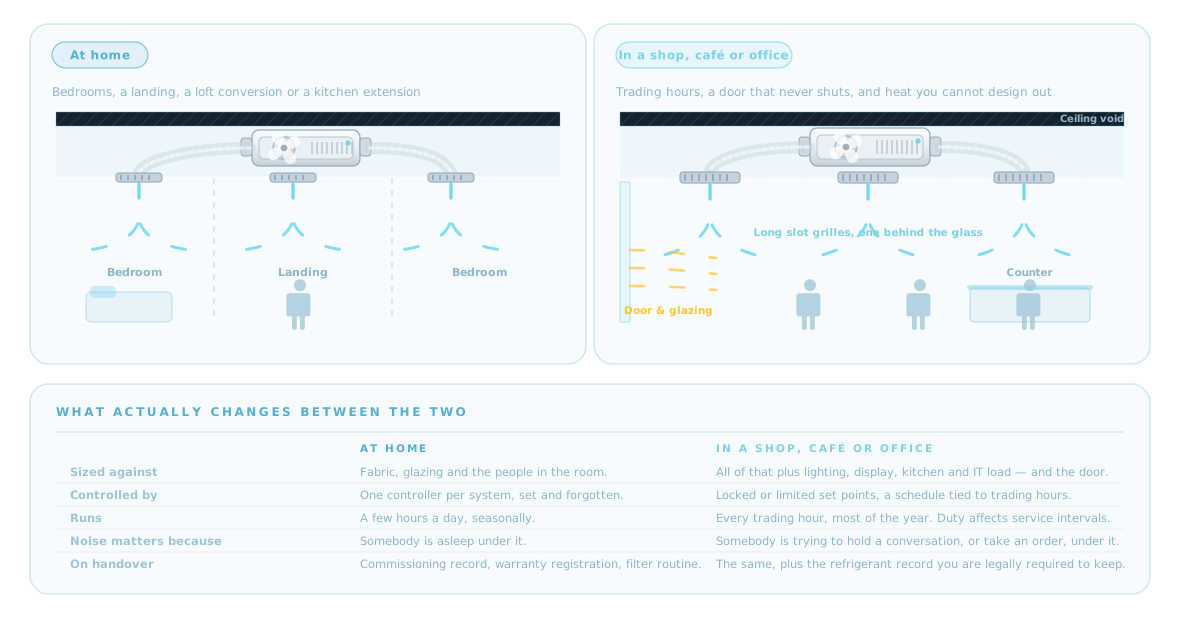
Any premises with a suspended ceiling has a continuous void, which is exactly what ducted wants. The unit and every metre of duct disappear, the tiles lift out for service, and the sales floor keeps its clean ceiling line.
Ducted lets you put air where the problem is rather than where the unit happens to fit. A slot grille running along the inside of a shop window washes the glazing; another over the door takes the edge off what walks in with the customers.
Ductwork is the noisy, dusty stage. It goes out of hours. Most of our commercial work is done with the premises still trading, area by area, and the space is fit to open each morning.
An office floor is never one temperature. The window side bakes, the meeting room is empty until it holds eight people and a screen, and the comms cupboard needs cooling in February. Dampers and separate sensors pay for themselves in complaints not received.
As the operator you are responsible for using qualified engineers, keeping an equipment record for each system, and having leak checks carried out at a frequency set by the system’s CO₂-equivalent refrigerant charge — not by its size in kilowatts. Larger systems also fall under TM44 air conditioning energy inspections. We work out which of your systems are in scope and put them on a schedule. There is more detail on the retail & light commercial page.
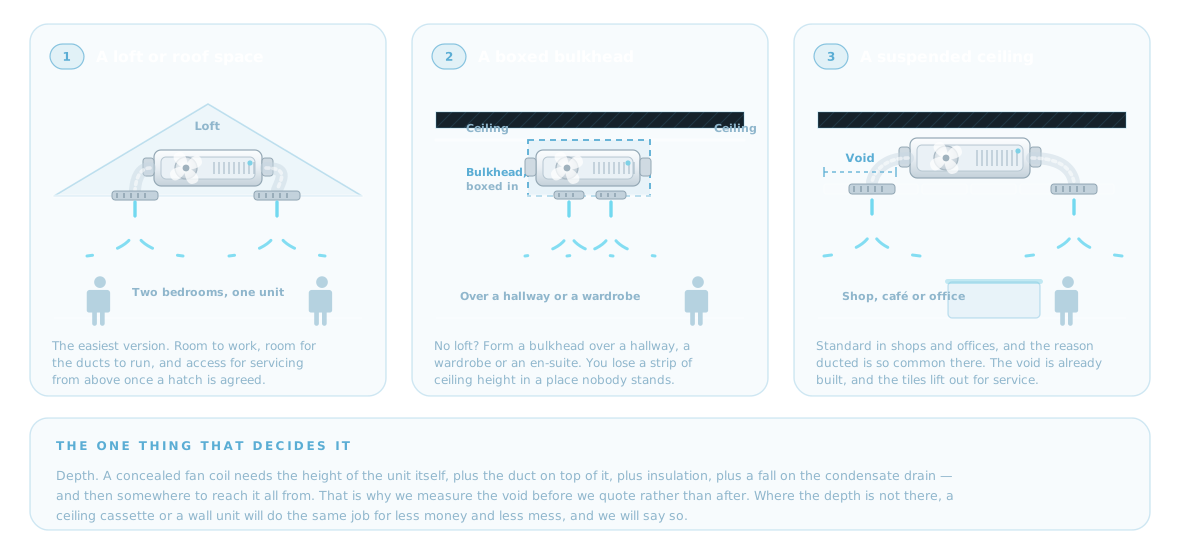
Three places it can be hidden
Ducted needs a void. Finding one is usually a question of imagination rather than luck — but where it genuinely is not there, we will say so rather than sell you a bulkhead you will resent.
Four things we would rather you heard from us
Every system type has a downside. These are the ones that come up after installation if nobody mentions them before.
There is more labour, more material and more design in it. You are buying the fact that you cannot see it. That is a legitimate thing to buy — but it should be a decision, not a surprise.
Everything is above your head and behind a hatch. Filters still need cleaning and the drain still needs checking, and both take longer than on a wall unit.
Unless you zone it. Rooms with very different loads — a north bedroom and a south one — will not both be right off a single unzoned system.
A good unit on bad ductwork is a bad system. Too long, too many bends, too small, badly insulated, and you get noise, weak airflow and condensation in the void. This is where the design time goes.
Not sure which shape of indoor unit suits the room? Choosing your system walks through the options, why sizing matters explains what goes wrong when it is guessed, and the range page compares every brand we fit on one scale.
We are not tied to one manufacturer
This page is about a type of indoor unit rather than a particular product, because the shape of the unit is a design decision and the badge on it is a separate one.
Every manufacturer we install










Every one of these makes a ducted fan coil, and we are an approved installer for all of them. Which we put in your ceiling is decided by the room, the void and the budget — not by whose van we happen to be driving. The range page compares them on one scale.
Why have ArcticNord fit it?
Most of what decides whether a concealed system is any good happens before anyone picks up a spanner — and all of it is hidden by the time you see the finished job.
Both of these live in a ceiling, and a ceiling is the one part of a building you cannot easily change your mind about. We measure the void, find the joists and the services already in it, and agree where the access is — before you have a price, not after the plasterboard is down.
We calculate the load from the glazing, the orientation, the insulation, the lighting and the people and equipment in the room. Rules of thumb produce systems that short-cycle, blow cold at whoever is nearest and cost more to run.
Refrigerant work is legally controlled. Our engineers are F-Gas registered, the charge is weighed to the actual pipe run rather than estimated, and the commissioning record is handed over on completion — which is also what keeps the manufacturer warranty alive.
Concealed kit costs more than a wall unit and is harder to service. Where the void is not there, or the room does not justify it, we say so. We would rather lose a job than fit something that has to be apologised for later.

Common questions
What is ducted air conditioning?+
The indoor unit is hidden in the ceiling void instead of hanging on the wall. Air is drawn back to it through one return grille, cooled or heated, and pushed out through insulated ducts to a slim grille in each room it serves. From inside the room you see grilles and nothing else.
How many rooms can one ducted unit do?+
Commonly two to four, though it depends entirely on the unit selected and how far the ducts have to run. The limit in practice is rarely the unit — it is the resistance of the ductwork and whether the rooms have similar enough loads to share a system sensibly.
How much ceiling void do I need?+
More than people expect, because it is not just the unit. It is the unit, plus the duct on top of it, plus insulation, plus a continuous fall on the condensate drain, plus room to get a hand in and change a filter. The honest answer is that we measure yours and tell you, because the depth varies a great deal between manufacturers and between slim and standard units.
Can I have a different temperature in each room?+
Not from a single unzoned system — every room on it gets the same air at the same time. Motorised dampers and per-room sensors will give you individual control and are well worth it in an office, but they are a cost and we will quote them separately so you can decide. Where you genuinely need per-room control on a tight budget, separate units are sometimes the better buy, and we will say so.
Is it noisy?+
It should be the quietest option you can fit, because the fan is not in the room. It becomes noisy when the ductwork makes the fan fight for the air — runs too long, ducts too small, too many tight bends, or grilles undersized. That is a design failure, not a product one.
Does it need a drain?+
Yes. A cooling coil produces condensate whenever it runs, and that water has to get to a waste, either by gravity with a continuous fall or by a pump. A drain that does not fall properly is the single most common reason for a stained ceiling, so we set it out at survey rather than solving it on the day.
Can it heat as well as cool?+
Yes — these are heat pumps, and in an English winter they are usually a cheaper way to heat a room than electric heating and often cheaper than a gas boiler serving the same space. They are not a whole-house heating system on their own; if that is what you want, look at ArcticNord Heat.
Do you cover my area?+
We install across Nottinghamshire, Derbyshire, Lincolnshire, Leicestershire, South and West Yorkshire. If you are near the edge of that, call and ask — we will tell you straight.
Cassettes do a similar job where the void is shallower — see ceiling cassettes. For premises rather than houses, start at retail & light commercial. For wall units, the Daikin Stylish and Midea Breezeless E are the two we fit most.
Send us a photo of the ceiling
Ducted is decided by what is above your head, so the useful first step is usually a look rather than a price. Tell us the rooms, the building and roughly when, and we will come and measure the void before anybody talks about money. If it turns out a cassette or a wall unit is the better answer, we will tell you that instead.