 Approved installer
Panasonic RAC Solo: air conditioning with nothing outside
Almost every air conditioning enquiry that gets refused is refused for the same reason: the box that has to go outside. In a conservation area it cannot go on a frontage. On a listed building it may not be allowed at all. In a flat there is often nowhere it could legally go even if everyone agreed. The RAC Solo removes the argument entirely: a flat panel 165mm deep, everything inside it, and nothing on the elevation but two round grilles. It heats as well as it cools.
F-Gas registered engineers • Free design & heat-load sizing • East Midlands, Lincolnshire & Yorkshire
The problem is never the indoor unit
Nobody objects to a slim panel inside your own room. What gets refused, deferred or quietly dropped is the condenser: a box roughly the size of a small suitcase, bracketed to an outside wall, with insulated pipework running to it. On a period frontage in a conservation area, that is the whole objection in one object.
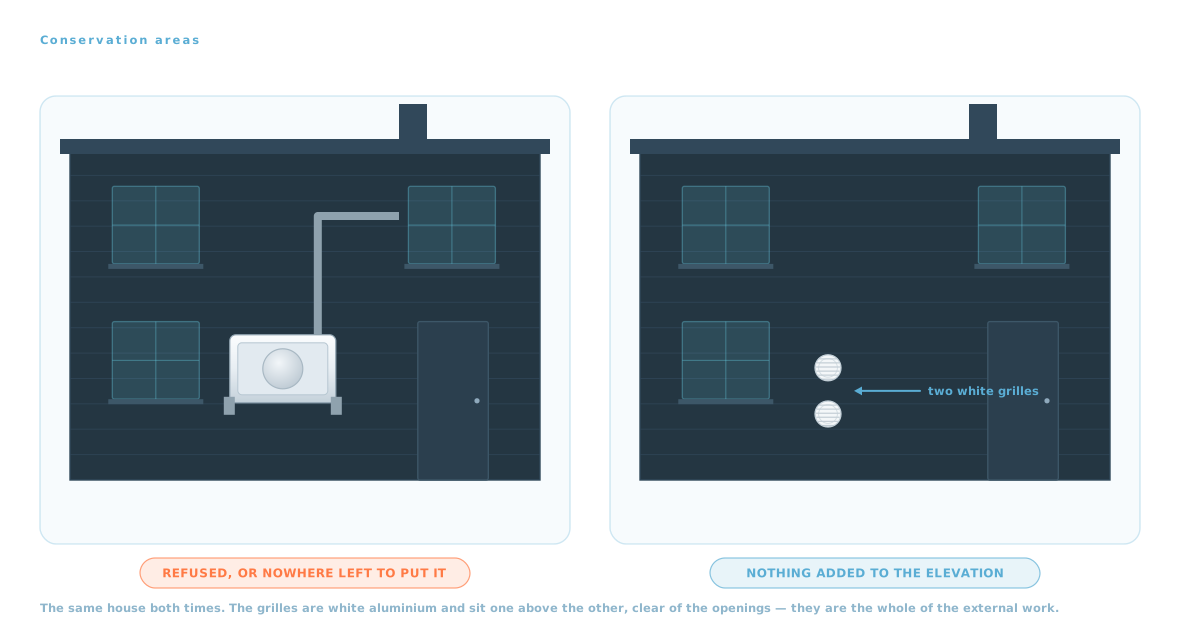
An outdoor unit can often still be permitted development in a conservation area, but not on a wall or roof slope fronting a highway. On a terrace, a townhouse or anything with the only usable wall at the front, that condition removes the only place the condenser could have gone, so the answer becomes no by geometry rather than by refusal.
Permitted development does not override listed building consent. Fixing a condenser and pipework to a listed elevation is an alteration, and it is judged on its effect on the character of the building. Plenty of these applications simply are not worth making.
Councils can withdraw permitted development rights over a defined area, often exactly the streets you would expect. Where an Article 4 direction is in force, work that would be permitted two streets away needs an application here.
Flats are treated differently from houses, and a lease will usually have something to say about fixing plant to the structure or to a demised wall. Even where planning is satisfied, the freeholder or managing agent is a second gate, and they are often the harder one.
Two things are worth establishing first, and both are free. Whether your address sits in a conservation area or under an Article 4 direction, your council publishes the boundaries, and they are rarely where people assume. And what the conservation officer actually objects to, because it is usually the unit on the elevation rather than the principle of cooling the building. A great many refusals are really objections to one box in one position. Knowing that before you design anything is the difference between an application worth making and a wasted one.
Two 162mm grilles are still an external alteration. On a listed building that can still need consent, and in a conservation area with an Article 4 direction it can still need an application: a smaller, far more winnable one, but an application. We are installers, not planning consultants: what we do is check your address, tell you honestly what we think you are facing, and put you on to the conservation officer before you commit to anything. Planning rules also change; we check them at the point of quoting rather than relying on what was true when this page was written.
One panel inside. Two grilles outside.
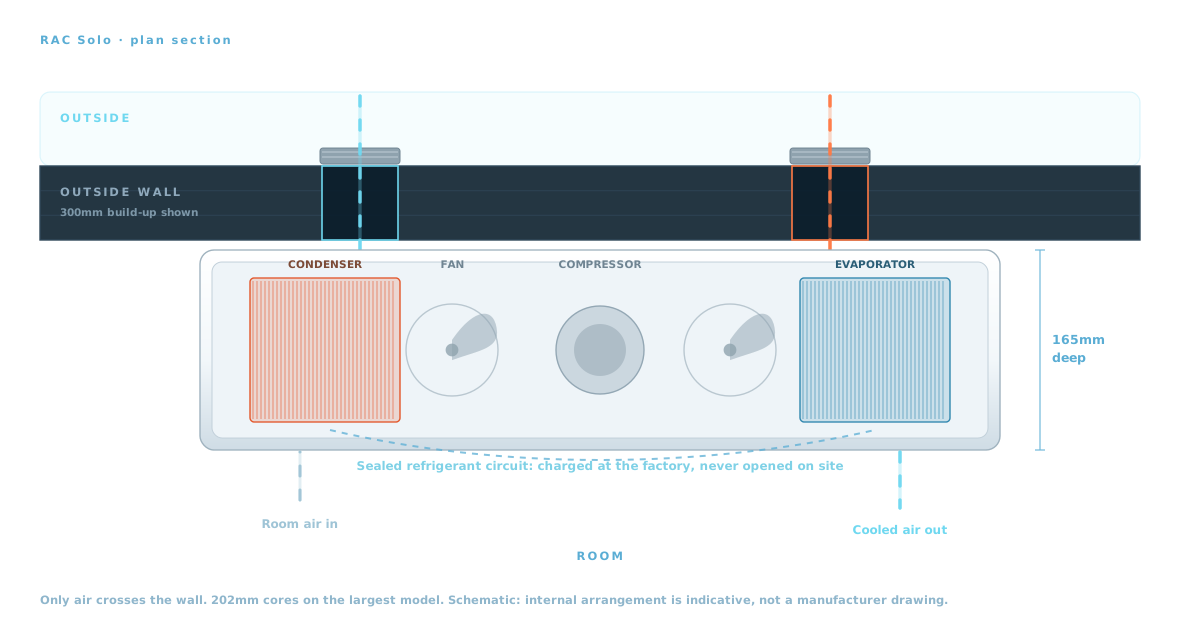
It looks more like a slim radiator than an air conditioner. Everything that would normally sit in a box in your garden is inside it instead, and the heat is carried out through two round holes in the wall behind it.
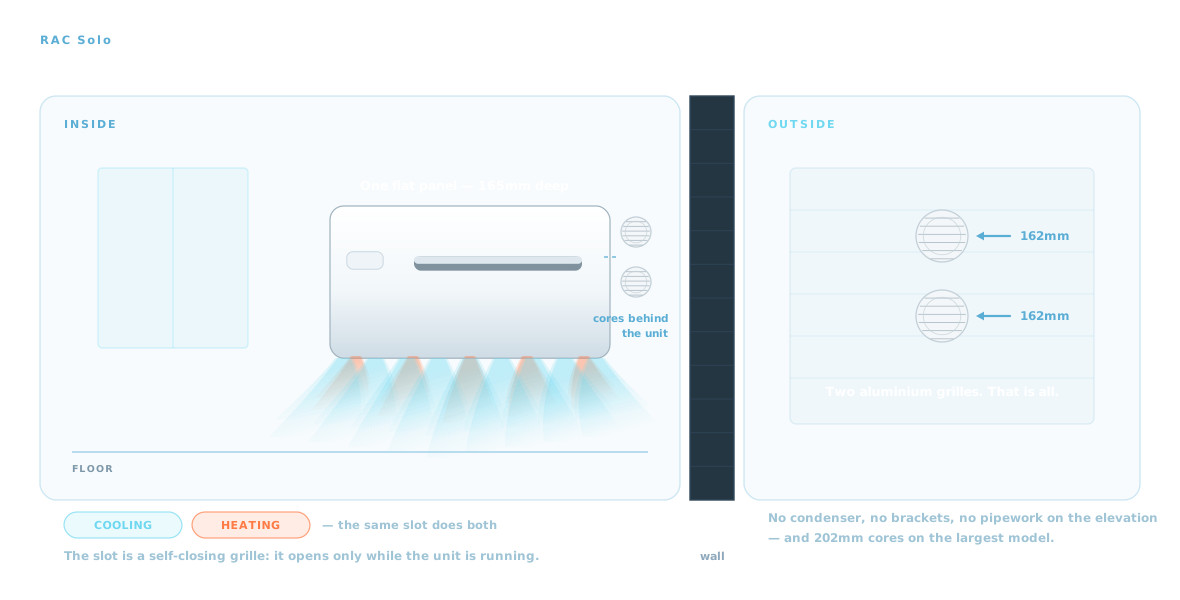
Roughly the size of a large radiator and only 165mm deep, in plain white. One slim slot across the front, and a self-closing grille behind it, the slot opens only while the unit is running, so switched off it reads as a panel on the wall rather than an appliance.
162mm each, cored through the wall behind the unit and finished outside with white fixed-fin aluminium grilles, one above the other. 202mm on the largest model. The kit comes with everything needed to pass through the wall, and we seal and make good both faces.
A proper heat pump, not a cooling box that sits idle from October. Heating works down to −15°C outside. There is a cooling-only version if a room genuinely never needs the heat, but for most people the heating is half the value.
It arrives sealed and filled at the factory, so nothing is joined up or charged on site. The work is coring two holes, hanging it, wiring it and dealing with the condensate, usually a day, with no scaffolding.
Four sizes, one room at a time
This is a single-room machine. It does not connect to other indoor units and there is no multi-room version. One unit per room is how these get used.
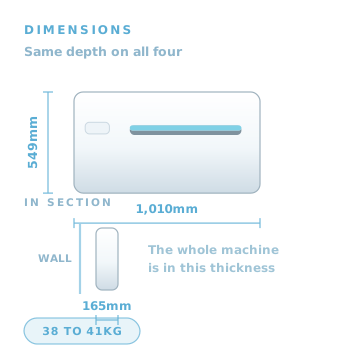
549mm high and 165mm deep on all four, 810mm wide on the 1.7kW and 1,010mm on the rest. 38 to 41kg, so the fixing into the wall matters and gets checked at survey.
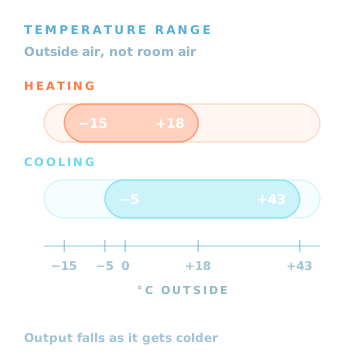
Heating from −15°C up to +18°C outside; cooling from −5°C up to +43°C. Output falls as it gets colder, which is why the room gets sized properly rather than picked off the headline kilowatt figure.
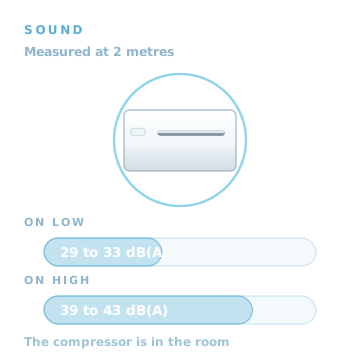
29 to 33dB(A) on low, 39 to 43dB(A) on high, measured at 2 metres. Worth saying plainly: there is no outdoor unit, so the compressor is in the room with you. It is quiet, but a split system puts its noisy half outside and this cannot.
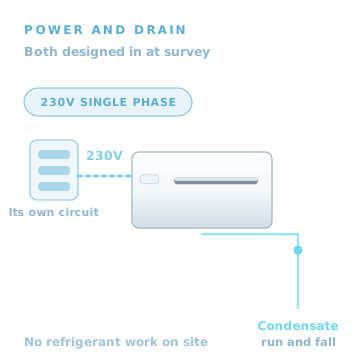
A normal 230V single-phase supply on its own circuit, plus somewhere for the condensate to run. Both are designed in at survey rather than improvised on the day.
Figures are Panasonic’s published specification for the RAC Solo R290 / R32 range. The 1.7kW model uses R290, a natural refrigerant; the other three use R32.
High, low, or into a corner
There is one hard rule: it has to go on a wall with an outside face, because it swaps air directly with outside. Everything after that is a choice about the room.
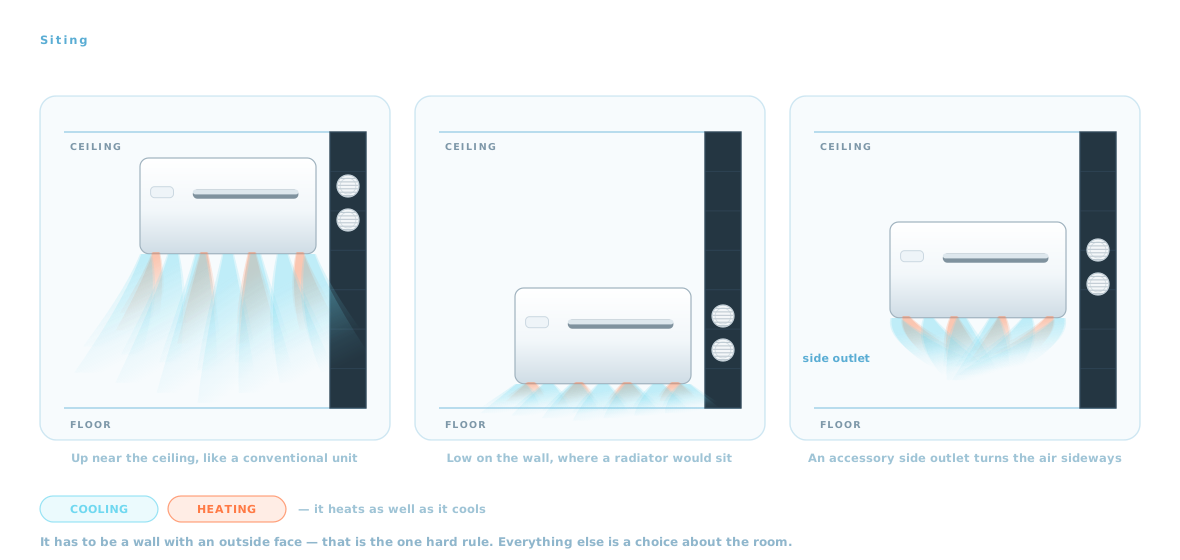
Up near the ceiling like a conventional wall unit. Throws air further across the room, and keeps the wall below it free for furniture.
Low on the wall, roughly where a radiator would sit. Suits rooms with full-height glazing, a sloping ceiling, or nothing usable higher up.
There is a side-outlet accessory that turns the airflow sideways, for units that have to go somewhere tight. It has to be built into the wall at installation, so it is a decision made at survey.
Chimney breasts, party walls and internal walls are out. That is the usual reason a RAC Solo turns out not to suit a room, and it is the first thing we check when you call.
When it is right, and when it is not
The RAC Solo solves one problem extremely well and is the wrong purchase everywhere else. It is worth knowing which you are before you spend anything.
Worth it when
- You are in a flat with nowhere to hang a condenser, or no permission to try
- The building is listed, or in a conservation area that would refuse an outdoor unit
- The freeholder or managing agent will not allow anything fixed to the outside wall
- There is no route to get pipework from the room to anywhere a condenser could go
- One room in an otherwise fine house needs doing, and a pipe run to a condenser would cost more than the unit
Not worth it when
- An outdoor unit is merely awkward rather than impossible. Awkward is cheaper to solve than to run around
- You want several rooms doing; a multi-split is cheaper and far more efficient
- The room is bigger than about 3kW of load. That is the top of the range
- The unit would go somewhere you need near-silence and cannot tolerate a compressor in the room
- The only outside wall is not where the unit needs to be
You pay for the missing outdoor unit in running cost. Panasonic rate the RAC Solo at SEER 4.10 to 4.70 and SCOP 3.40 to 3.80. A conventional split such as the Panasonic Etherea is rated A+++ at both ends of the label: broadly twice as efficient over a season. That is the deal: no condenser, no consent argument, no pipework, and roughly double the electricity for the same comfort. Where an outdoor unit genuinely cannot go, that is an easy trade and this is the honest answer. Where it can, a standard Panasonic split will cost you less every year you own it, and we will say so.
Why have ArcticNord fit it?
It is a simple installation done badly rather easily. Two 162mm holes through someone’s wall is not work you want approached casually.
The wall, the room load, where the cores can land and whether an outdoor unit really is impossible. If a normal split would serve you better we will tell you, even though it is a bigger job for us.
Rooms get calculated, not guessed. At 1.7 to 3.0kW there is not much headroom in this product, so getting the size right is the difference between comfortable and disappointing.
Cored on the right line, sealed, and made good inside and out, with the correct grilles fitted to the outside face. Drilling 162mm through someone’s wall is the part of this job that cannot be undone, so it is set out before anyone starts.
This particular unit needs no refrigerant work on site, but nearly everything else we fit does, and the same commissioning discipline applies either way.

Common questions
Can you really have air conditioning with no outdoor unit?+
Yes. Everything that would normally sit in a box outside is inside the RAC Solo instead, in a flat panel 165mm deep on the wall. Heat is carried out through two holes cored in an outside wall rather than through pipework to a condenser in the garden. There is nothing on the outside of the building except two small white grilles, one above the other. It is a full heat pump too, so it heats as well as cools.
What is the catch?+
Running cost. Panasonic rate the RAC Solo at SEER 4.10 to 4.70 and SCOP 3.40 to 3.80. A conventional split system with an outdoor unit is typically rated A+++ and around twice as efficient over a season. You are paying more per hour to run it in exchange for having no outdoor unit. Where a condenser is genuinely impossible that is a trade worth making. Where it is merely awkward, it usually is not, and we will tell you which of the two you are in before you have spent anything.
We are in a conservation area. Can we have air conditioning at all?+
Usually yes, but the outdoor unit is the problem, not the air conditioning. An outdoor unit can often still be permitted development in a conservation area, but not on a wall or roof slope fronting a highway, so on a terrace or a townhouse whose only usable wall is the front, there is nowhere left to put it. A RAC Solo has no outdoor unit, so that condition has nothing to apply to. The two grilles are still an external alteration, and we check your specific address before quoting rather than assuming.
What about a listed building?+
Listed building consent is separate from planning and permitted development does not override it. Fixing a condenser and pipework to a listed elevation is an alteration judged on its effect on the character of the building, and many of those applications are not worth making. Two small grilles are a far smaller proposition, but they are still an alteration and can still need consent. We would want you to speak to the conservation officer before committing, and we will tell you that rather than take the order.
What is an Article 4 direction and does it affect me?+
It is a council direction that withdraws permitted development rights over a defined area, often exactly the streets you would expect in a historic centre. Where one is in force, work that would be permitted two streets away needs an application. It is one of the things we check against your address.
We are in a flat and the freeholder has said no to an outdoor unit.+
That is one of the most common reasons people end up here. Flats are treated differently from houses for planning, and the lease usually has something to say about fixing plant to the structure. Even where planning is satisfied, the freeholder or managing agent is a second gate and often the harder one. A RAC Solo puts nothing on the outside of the building, which changes what you are asking them to agree to, though you should still ask, because the two cores go through the fabric.
Where does it make sense?+
Flats where there is nowhere to hang a condenser and no permission to try. Listed buildings and conservation areas where an outdoor unit would never get consent. Rooms with no external route for pipework. Rented property where the freeholder will not allow anything fixed to the outside wall. Occasionally one hot room in an otherwise fine house, a loft office, a south-facing bedroom, where running pipework down to a condenser would cost more than the unit.
How big are the holes, and where do they go?+
Two 162mm cores through an outside wall, becoming 202mm on the largest model. They sit behind the unit, one above the other, never side by side, and are finished outside with white fixed-fin aluminium grilles. The kit comes with everything needed to pass through the wall, and we seal and make good both faces. The wall has to have an outside face. That is the one hard rule, and it is the usual reason a RAC Solo turns out not to suit a room.
Where on the wall does it go?+
High up near the ceiling like a conventional unit, or low down where a radiator would sit: Panasonic support both, and neither is a compromise. There is also a side-outlet accessory for corner positions, which turns the airflow sideways where the unit has to go somewhere tight.
How much can it do?+
1.7, 2.0, 2.5 or 3.0kW: one room at a time. A bedroom, a home office, a small flat’s living room. It is not a whole-house machine and it does not connect to other indoor units. If you want several rooms doing, a conventional multi-split is both cheaper and considerably more efficient, assuming you have anywhere to put the outdoor unit.
Does it heat as well as cool?+
Yes, and that is half the point of it. It is a heat pump, not a cooling box that sits idle from October. Heating works down to −15°C outside, which is well past anything the East Midlands produces. There is a cooling-only version if a room genuinely never needs the heat.
Is it noisy?+
29 to 33dB(A) on its low setting and 39 to 43dB(A) on high, measured at 2 metres. Worth being straight about the reason that matters: there is no outdoor unit, so the compressor is in the room with you rather than in the garden. It is quiet, but a split system puts its noisy half outside and this cannot.
How long does it take to install?+
Usually a day. The unit arrives sealed and filled at the factory, so nothing has to be joined up or charged on site. The work is coring the two holes, hanging the unit, wiring it and dealing with the condensate. No scaffolding, no outdoor unit to site or commission.
Do I need planning permission?+
This is precisely the product that avoids the question. Most domestic outdoor units fall under permitted development subject to conditions, but that changes in a conservation area, on a listed building or in a flat, and a RAC Solo puts nothing on the elevation except two grilles. We still check your address before quoting, and if we think you need to ask someone, we will say so.
If an outdoor unit is possible, the rest of the Panasonic range will cost less to run, and the range comparison puts every brand we fit on one scale.
Tell us about the room and the wall
Our online selector prices conventional split systems, so it cannot cost a RAC Solo. Send us the room size, which wall faces outside, and why an outdoor unit is off the table, or call. We will tell you whether this is the right product before we tell you what it costs.